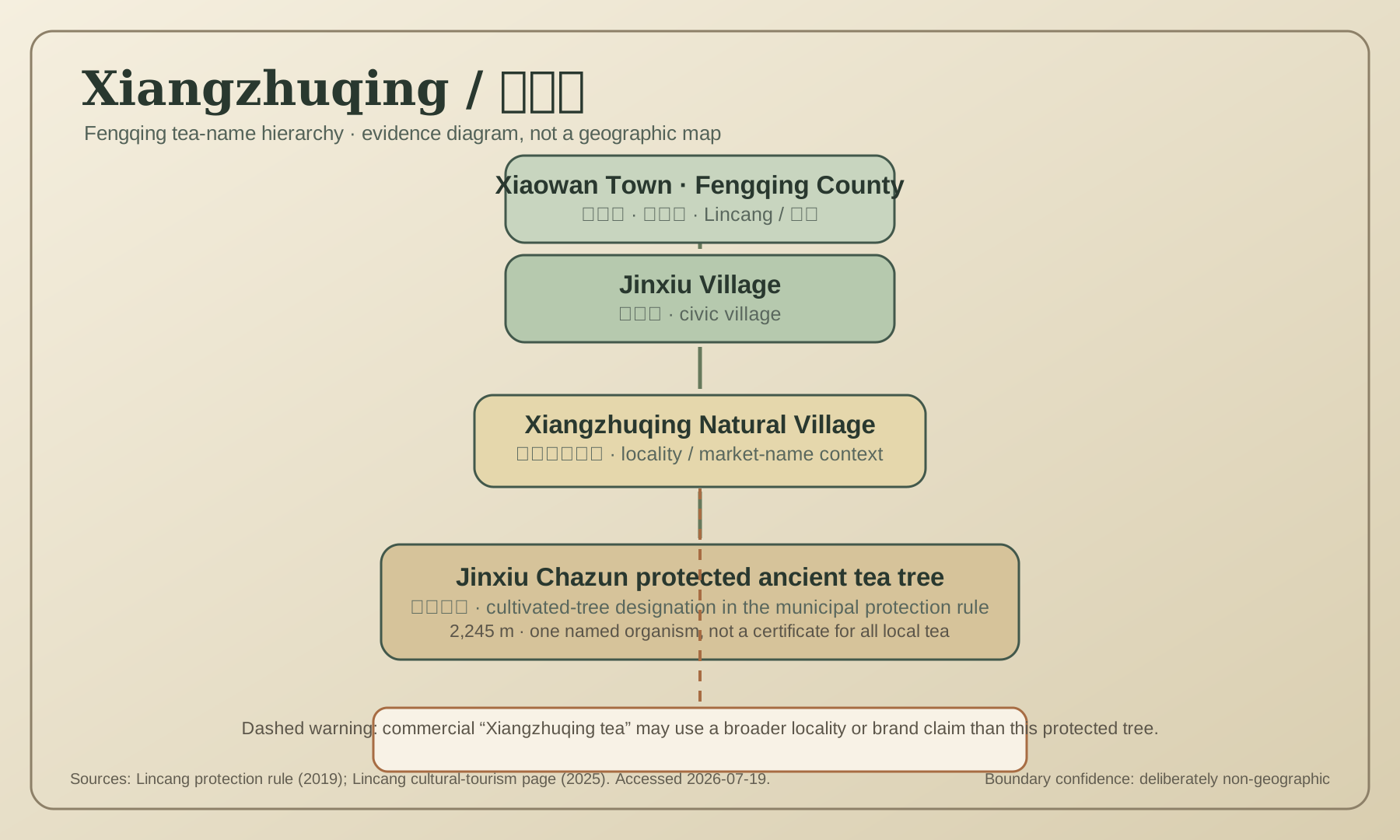
Place relationship diagram notes and sources
Diagram status: Not publication-grade: this evidence diagram deliberately does not draw an inferred village, garden, or market boundary.
- Lincang City protection rules and cultural-tourism page listed in the dossier; schematic prepared 2026-07-19
Xiangzhuqing (香竹箐) is a natural village under Jinxiu Village, Xiaowan Town, Fengqing County. It is home to Jinxiu Chazun (锦绣茶尊), the protected cultivated tea tree also known as the Jinxiu Tea King.
The tree is unusually well documented. Tea sold under the village name is a much broader claim.
What the landmark record establishes
The municipal protection rule identifies one tree at 2,245 metres, a 3 km² protection area and a core 200 metres in diameter. It calls for protective management and an annual spring picking.
Official accounts repeat an age estimate exceeding 3,200 years, but the public material here doesn’t disclose a reproducible dating method. Treat that as an attributed estimate, not an age for nearby gardens.
A Chinese encyclopedia account gives a conflicting altitude and calls the tree wild. This guide follows the specific municipal protection rule’s cultivated designation while keeping that disagreement recorded.
What might the tea taste like?
The usable description comes from a Yunnan Chunming product: high aroma, a full sweet cup, little bitterness or astringency and a cooling throat sensation. That is the producer’s account of its own tea. There isn’t an independent tasting series to establish a Xiangzhuqing flavour.
Fengqing also makes Dianhong black tea. Confirm whether the product is black tea or sun-dried raw-pu-erh material before comparing tasting notes.
Buying beyond the tree photograph
Ask whether the leaf is claimed to come from the landmark, the protected area or another village garden. Those claims require different evidence. Then ask for the harvest, maker and batch.
A photograph of Jinxiu Chazun doesn’t connect an anonymous cake to the tree. For a first purchase, a sample with an ordinary, documented garden claim is easier to evaluate than a premium resting entirely on the age estimate.
Sources and limits
All sources accessed 19 July 2026.
- Lincang City, Implementation Measures for Protecting the Jinxiu Chazun Ancient Tea Tree (2019) - primary municipal protection rule: civic nesting, coordinates, elevation, cultivated status, dimensions, protection area and annual protective picking.
- Lincang Culture and Tourism Bureau, Jinxiu Chazun Scenic Area (2025) - official tourism page confirming location and repeating the 3,200-plus-year estimate; treated as attributable, not methodological age evidence.
- Yunnan Forestry and Grassland Bureau, CCTV’s Chinese Ancient Trees visits Lincang (2014) - institutional report on experts’ estimated age and landmark measurements.
- Fengqing County People’s Government, Fengqing overview (2024) - county-level Fengqing geography, 13 townships and repeated landmark age claim.
- Yunnan Agriculture and Rural Affairs Department, Fengqing Dianhong: from a cup of tea to a 10-billion-yuan industry (2026) - official current context for Fengqing/Dianhong history and industry; not Xiangzhuqing garden evidence.
- Yunnan Chunming Tea, Xiangzhuqing product/company sheet - manufacturer/producer information on trademarked product categories and product-specific sensory claims only.
- Da Zhen Pu-erh, Fengqing tea region: ancient tea proliferates (2020) - Chinese specialist/community overview used for contextual leads only; it is not used for hard Xiangzhuqing measurements.
A note on what is still missing: The SVG/PNG/WebP package shows hierarchy rather than licensed geographic boundaries. We found no independent tasting across several producers, garden-wide ecology study, reproducible tree-age method, current normalized price pair or complete locality and garden matrix. Those gaps stay visible, especially around the famous tree story.
Quick answers
Frequently asked questions
What does the Xiangzhuqing tea name identify?
Xiangzhuqing is a natural village in Jinxiu Village, Xiaowan Town, Fengqing County, Lincang, Yunnan.
What does Xiangzhuqing tea taste like?
One producer reports high aroma, full body, sweetness, little bitterness or astringency and a cool throat; no independent series shows that pattern is representative.
What is Xiangzhuqing commonly confused with?
The protected Jinxiu Chazun tree, its protection area, Xiangzhuqing village tea and Fengqing county tea are not interchangeable claims.
What should I ask before buying Xiangzhuqing tea?
Does this tea claim the landmark tree, its protection area or broader Xiangzhuqing leaf, and what documents connect the lot?