How Processing Affects Raw Pu-erh Aging
Exploring how partial enzyme deactivation and brief steaming during compression enable raw pu-erh tea's natural aging process and flavor development over time.
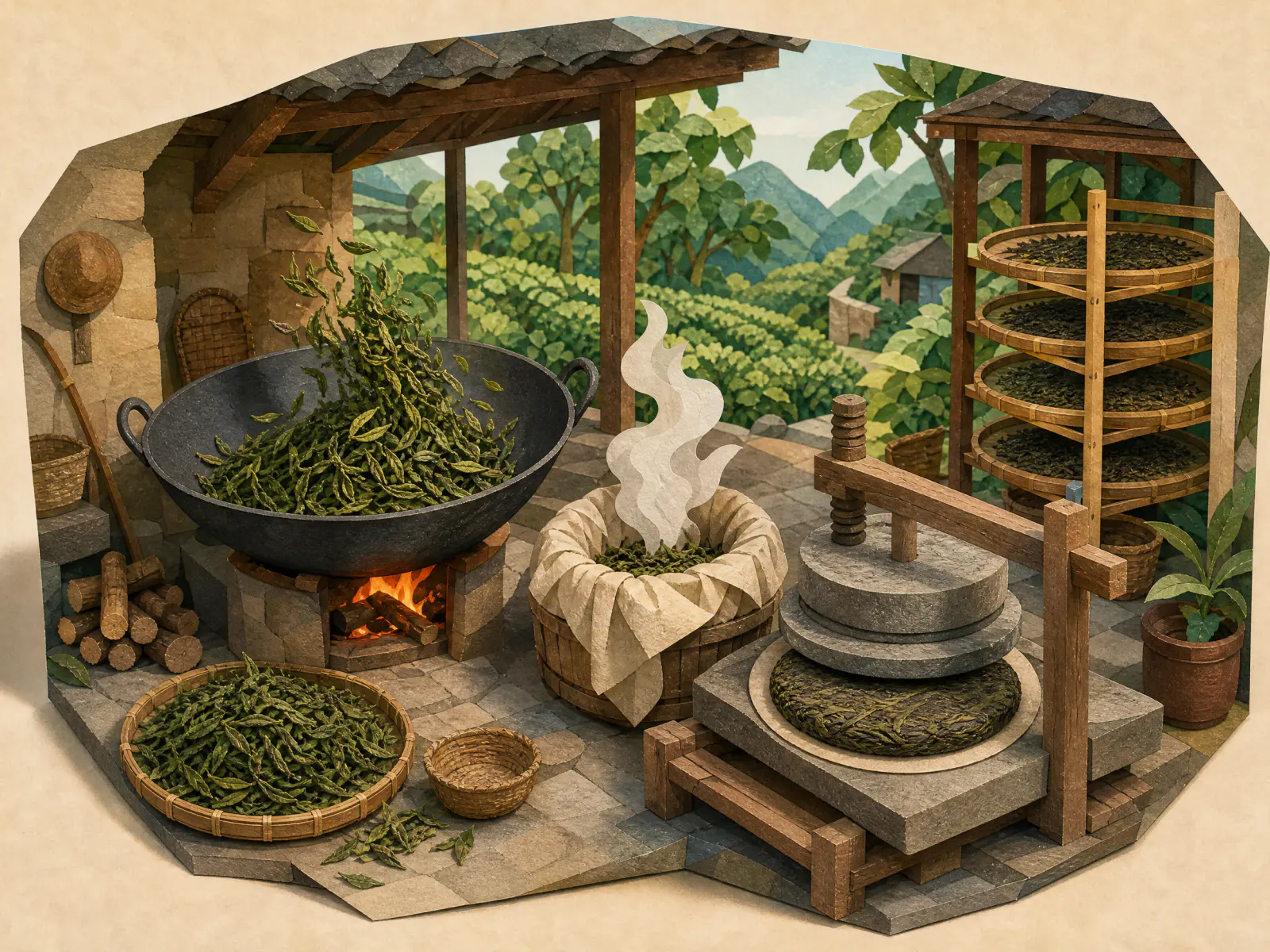
Pressing a raw pu-erh cake doesn’t stop it ageing. The steam softens dry leaves so they can hold a shape; once dried, the tea can continue changing in storage.
The confusion comes from an earlier heating step, sha qing. If heat stops oxidation during processing, why doesn’t it stop later change too?
What sha qing does
After picking and withering, producers heat the leaves in a wok or machine. This fixation step slows the rapid enzymatic browning of fresh leaf. They then roll and sun-dry the tea to make loose maocha.
The amount of heat and time affects the young tea and its later development. But ageing can’t be reduced to how much enzyme activity survives the wok. Slow chemical changes and microbial activity also contribute, and storage conditions influence the result.
Why steam is used before pressing
Dry maocha is too brittle to press neatly. A short exposure to steam makes it pliable enough to form a cake or brick under a stone or mechanical press. The tea then needs to dry.
This brief steaming is a shaping step. It doesn’t sterilise the cake or make it chemically inert. Raw pu-erh can lose fresh floral notes and develop woodier, mellower flavours over time, though the result varies.
Ripe pu-erh goes through an additional wet-piling fermentation before pressing. Its darker starting character comes from that separate process.
Age changes tea; improvement takes more
A cake’s starting material, processing and storage all matter. More years won’t reliably fix poor leaf or a storage problem. When comparing ages, look for a cup you enjoy: clean aroma, satisfying texture and a lasting finish. A date on the wrapper can’t tell you those things.
Quick answers
Frequently asked questions
What is sha qing in raw pu-erh production?
Sha qing is the heating or fixation step that slows enzymatic browning after the leaf is picked. Its execution influences the young tea, but it is only one part of processing and later ageing.
Does steaming a pu-erh cake stop it from ageing?
No. Steam briefly softens dry maocha so it can be pressed. Once the cake is dried and stored, slow chemical and microbial changes can continue, although storage conditions strongly affect the result.
Does every raw pu-erh improve with age?
No. Ageing changes tea but does not guarantee improvement. Starting material, processing, compression, humidity, temperature, airflow and odour exposure all influence whether a cake becomes more enjoyable.