Tea and Health: What I Make of the Research
What tea and health research can—and cannot—tell us, from early gut-microbiome findings to open questions about mood and long-term wellbeing.
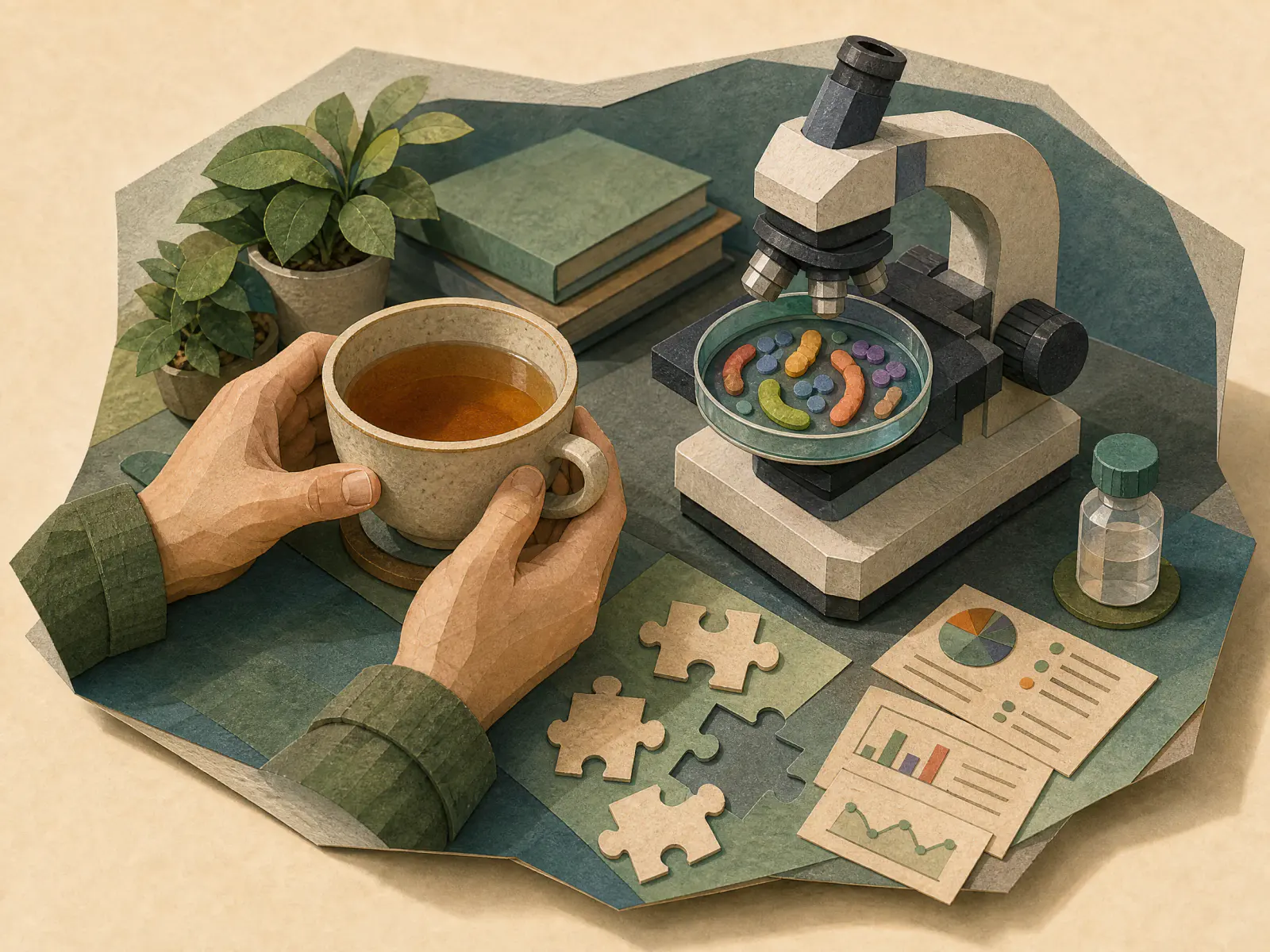
I started reading about tea and health because I wanted to know whether my daily cups were doing anything useful. I still don’t have a simple answer.
I used to work as a chemist researching arsenic trioxide as a treatment for acute promyelocytic leukaemia. That experience made me interested in compounds from Chinese medicine, and careful about the distance between a promising experiment and a treatment tested in people.
Tea deserves the same care. A compound affecting a cell or a mouse is a reason to investigate, but it tells us little about what a few cups will do for a person.
The research I keep returning to
The gut microbiome interests me most. Tea contains many compounds, and gut microbes can interact with them in different ways. Studying one isolated compound won’t capture everything happening after we drink a cup.
This review of tea’s chemistry helped me sort the compounds from the claims. A review of tea and the microbiome describes several possible mechanisms, with much of the evidence still coming from laboratory and animal work.
I want to see what survives in larger human studies, particularly over longer periods. For now, I wouldn’t turn those mechanisms into a health promise.
What a cup does for me
As I get older, I sometimes feel slower mentally, and depression comes more easily. That makes research on mood personal. A meta-analysis found an association between tea intake and lower depression risk, but it didn’t establish that tea prevents or treats depression. My daily cup is a pleasant ritual; it doesn’t replace care.
My less ambitious observation is that I have less constipation after drinking tea. That’s my experience, with no way to separate tea from everything else in my day. I’ll take the small benefit and keep reading.
Quick answers
Frequently asked questions
Is drinking tea proven to improve health?
Tea is associated with several favourable health outcomes, but the strength of evidence varies. Observational studies cannot prove cause, and results from cells or animals do not automatically apply to everyday tea drinking.
Does tea improve the gut microbiome?
Laboratory and animal studies suggest plausible effects, and early human research is interesting, but the size and practical importance of the effect for an individual tea drinker remain uncertain.
Can tea treat depression or another medical condition?
No tea should be treated as a replacement for medical care. Studies may find associations with mood or investigate tea compounds, but that does not establish tea as a treatment for depression or another condition.