The Benefits of Drinking Tea: A Scientific Perspective
What tea and health research can—and cannot—tell us, from early gut-microbiome findings to open questions about mood and long-term wellbeing.
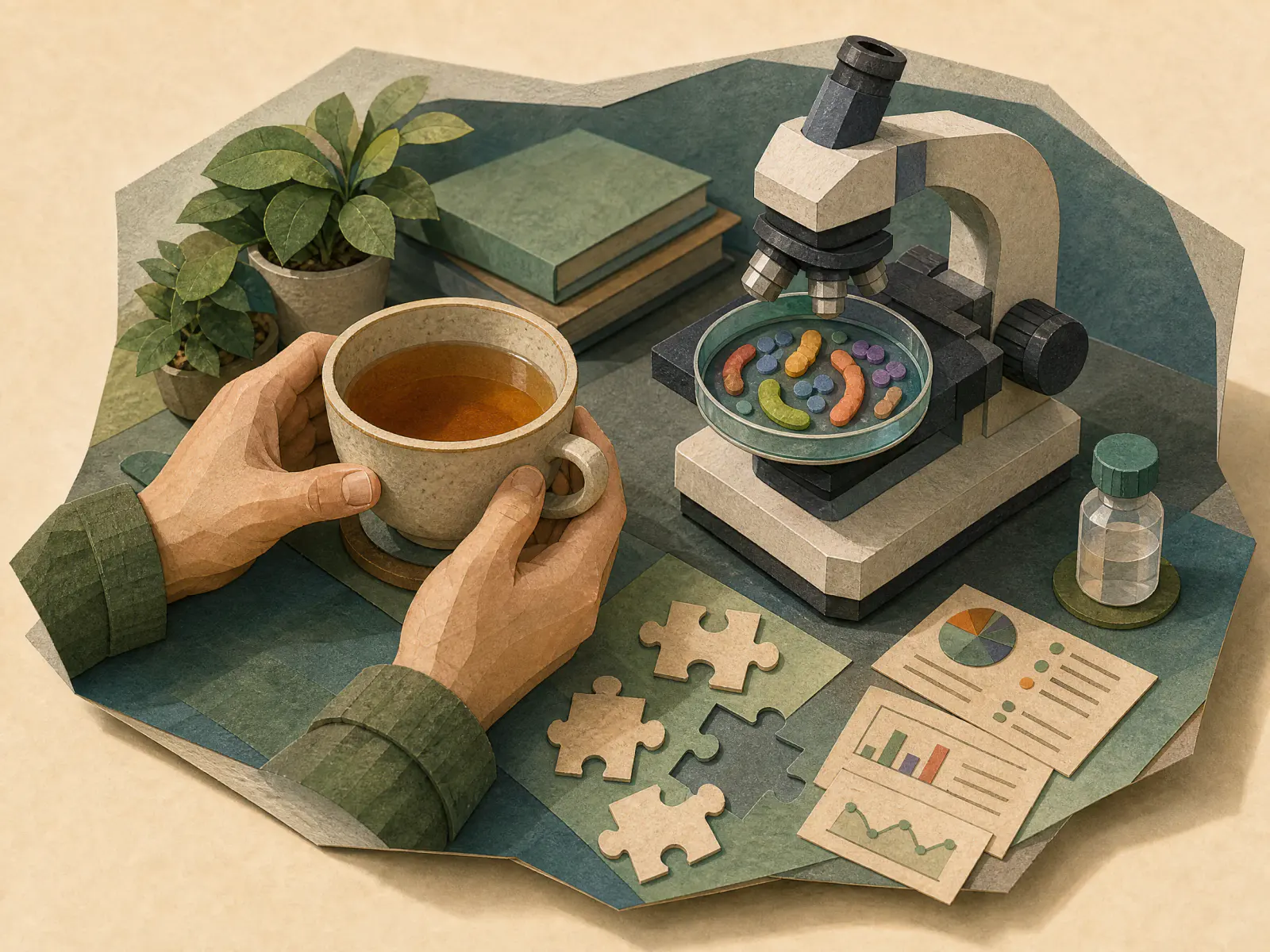
I started reading about tea and health for a very personal reason: I wanted to know whether my daily cups were doing anything useful. The research is fascinating, but it is also much messier than a cheerful headline about “tea benefits” makes it sound.
I used to work as a chemist researching arsenic trioxide as a treatment for acute promyelocytic leukaemia, a rare type of cancer. The drug came from Chinese medicine, was isolated and tested in humans, and eventually became the FDA-approved treatment Trisenox. One vial costs $13,634 USD. That experience taught me two things. Chinese medicine can contain genuinely useful compounds, and proving that usefulness through isolation and human trials takes a long time and a lot of money. Tea may contain useful compounds too, but it has to clear the same scientific hurdles.
Why a simple answer is so hard
Theabrownins are a good example. Much of the research has been done in rats, and we do not have the large randomised human trials needed to turn these findings into FDA-approved drugs. Tea itself is complicated, with more than 291 volatile organic compounds and 83 odour-active compounds. One paper can focus on a compound that may help fat digestion, while another looks at a different compound and raises a carcinogenic concern. That leaves plenty of room for non-scientific articles and videos to tell very different stories about the same drink.
This review of tea’s chemical constituents and biological properties breaks down the compounds and the studies behind each one. Looking at its table, my own feeling is that we are still 10 to 20 years away from a solid scientific understanding of the subject. Tea is unlikely to repeat the arsenic trioxide story soon, with one isolated compound treating an illness and passing FDA approval.
That does not mean we should shrug and ignore the research. Lab and animal studies have found effects worth following, but they tell us much less about an ordinary person drinking a few cups a day. That distinction matters.
The gut is the bit I keep coming back to
I am especially interested in tea’s relationship with the gut microbiome, or GM. The microbiome is connected to digestion, nutrient absorption, immune regulation, and even mental health. Tea appears to affect it both directly and indirectly.
This research is even trickier than the chemistry I used to work on. The microbiome changes over time and contains groups of species that cooperate or compete with one another. This paper gives a useful picture of where the research stands. It describes several plausible ways tea could affect the gut, but much of the evidence is still preclinical. I am particularly curious about the long-term relationship with obesity, mood, and brain health.
That subject is personal. As I get older, I sometimes feel that my brain is slower and depression comes more easily. I want to work on that. This meta-analysis found an association between higher tea intake and lower depression risk, but it does not show that tea prevents or treats depression. For me, a cup can still be a pleasant daily ritual. It just should not be mistaken for medical care.
Everyone responds differently to tea and coffee, so it is worth paying attention to your own body rather than treating a study as a promise. My own very unglamorous observation is that I have less constipation after drinking tea. Small win, but I will take it.
Quick answers
Frequently asked questions
Is drinking tea proven to improve health?
Tea is associated with several favourable health outcomes, but the strength of evidence varies. Observational studies cannot prove cause, and results from cells or animals do not automatically apply to everyday tea drinking.
Does tea improve the gut microbiome?
Laboratory and animal studies suggest plausible effects, and early human research is interesting, but the size and practical importance of the effect for an individual tea drinker remain uncertain.
Can tea treat depression or another medical condition?
No tea should be treated as a replacement for medical care. Studies may find associations with mood or investigate tea compounds, but that does not establish tea as a treatment for depression or another condition.