Pu-erh Tea and the Gut Microbiome
Looking at recent research on how pu-erh tea's microbial fermentation changes the gut microbiome — and what's evidence versus hype for the average pu-erh drinker.
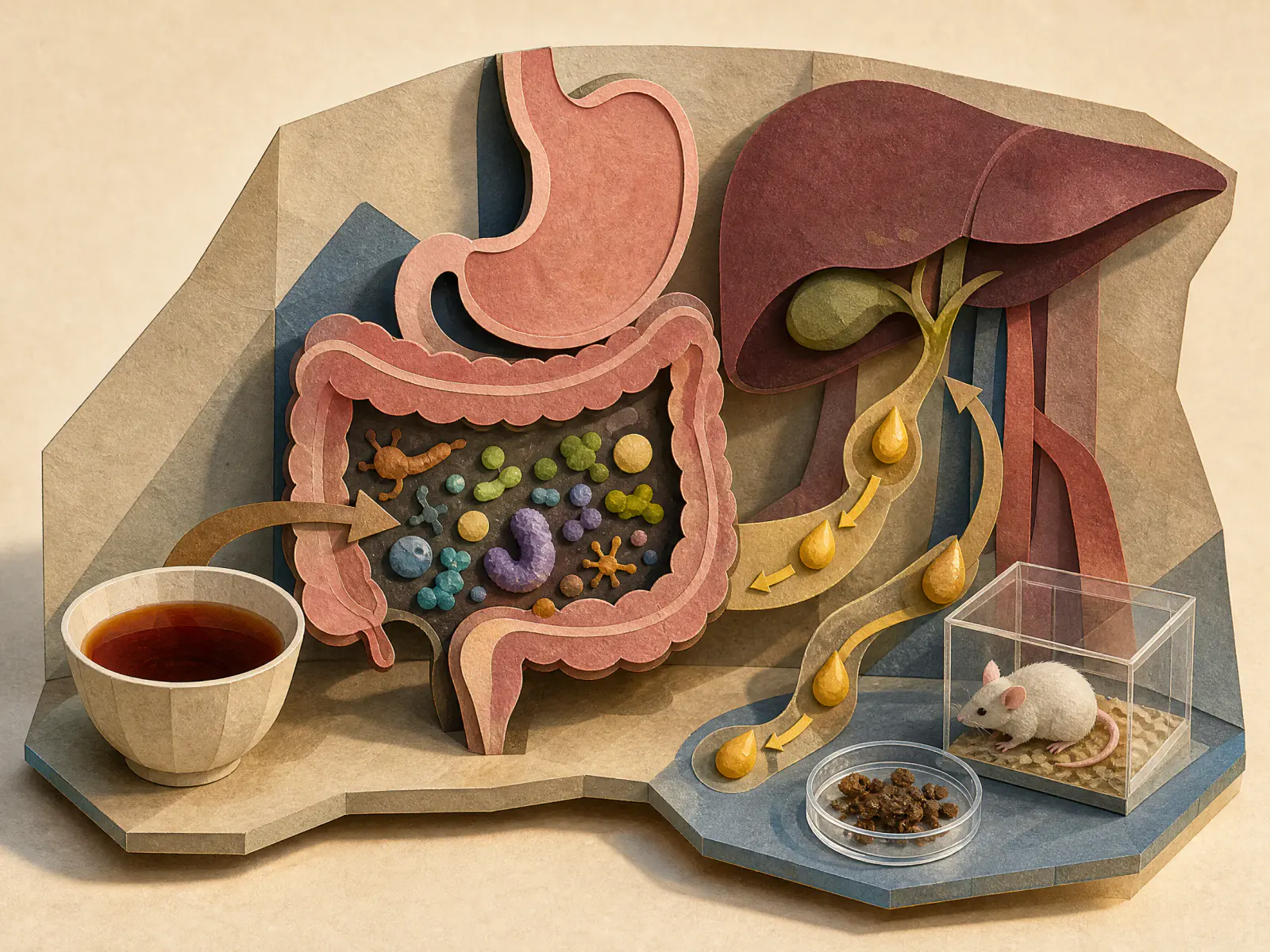
The pu-erh research I find most interesting concerns gut microbes and cholesterol. It gives scientists something specific to test, though it doesn’t yet tell us what health benefit to expect from a daily cup.
A 2022 review helped me follow the work. Most of the evidence comes from mice, with a small amount of human data. Keeping that distinction in view makes the papers easier to read.
Why fermentation matters
Ripe pu-erh goes through wet-pile fermentation, where microbes change the leaf’s chemistry. Raw pu-erh changes more slowly in storage. The two processes produce different teas, so a finding about one preparation shouldn’t automatically apply to every cake.
Researchers often study theabrownins, complex dark-coloured compounds found in fermented tea. They’re part of the chemistry behind ripe pu-erh’s dark liquor, and one possible route through which the tea affects gut microbes.
The cholesterol study
A 2019 study in Nature Communications investigated how pu-erh and theabrownin affect bile-acid metabolism. In mice, changes in gut bacteria reduced bile-salt hydrolase activity and altered intestinal signalling. The liver then used more cholesterol to make bile acids.
The paper also included a four-week intervention with 13 male participants. Changes in gut microbes and blood lipids made it an interesting human lead, but the study was too small and short to establish a reliable benefit for ordinary tea drinkers.
Why the mouse results aren’t a drinking prescription
Mice on a high-fat diet are a useful experimental model, but their response doesn’t tell us what will happen to a person drinking pu-erh for pleasure. An isolated compound also differs from whole tea.
The review describes one revealing example: whole pu-erh and purified theabrownin had opposite effects on Faecalibacterium prausnitzii. Reducing the tea to its best-known compound can miss interactions that matter.
That leaves weight-loss, anti-inflammatory and anti-ageing claims well ahead of the human evidence. “Detox” is even less useful: it doesn’t say what outcome has been measured.
I’d like to see larger independent trials following people for longer, with clear descriptions of the tea and dose. Until then, the research is a reason for curiosity. I choose my pu-erh for the cup, and wouldn’t use it in place of cholesterol testing or treatment.
References
Jia W, Rajani C, Lv A, Fan TP, Zheng X. Pu-erh tea: A review of a healthful brew. Journal of Traditional Chinese Medical Sciences. 2022;9:95-99. https://doi.org/10.1016/j.jtcms.2022.04.005
Huang F, Zheng X, Ma X, et al. Theabrownin from pu-erh tea attenuates hypercholesterolemia via modulation of gut microbiota and bile acid metabolism. Nature Communications. 2019;10(1):4971.
Liu JY, He D, Xing YF, et al. Effects of bioactive components of pu-erh tea on gut microbiomes and health: A review. Food Chemistry. 2021;353:129439.
Pedan V, Rohn S, Holinger M, Huhn T, Chetschik I. Bioactive compound fingerprint analysis of aged raw pu’er tea and young ripened pu-erh tea. Molecules. 2018;23(8):1931.
Quick answers
Frequently asked questions
Does Pu-erh tea improve gut health?
Animal and laboratory studies suggest plausible effects on gut microbes and bile-acid pathways, but human evidence is still limited. The research does not support promising a specific gut-health result from drinking Pu-erh.
What are theabrownins in Pu-erh tea?
Theabrownins are complex dark-coloured compounds associated especially with fermented teas. Researchers are studying their relationships with microbes, bile acids and lipid metabolism, but composition and effects vary by tea and study.
Can Pu-erh tea lower cholesterol?
Some studies report promising mechanisms or changes, particularly in animals, but Pu-erh is not a substitute for cholesterol testing, diet advice or prescribed treatment. Human clinical evidence is not yet strong enough for a reliable personal promise.