Yellow Spots on a Pu-erh Cake: What I Did
Discovering yellow spots on a 2024 pu-erh cake and researching whether it's beneficial or harmful fungal growth
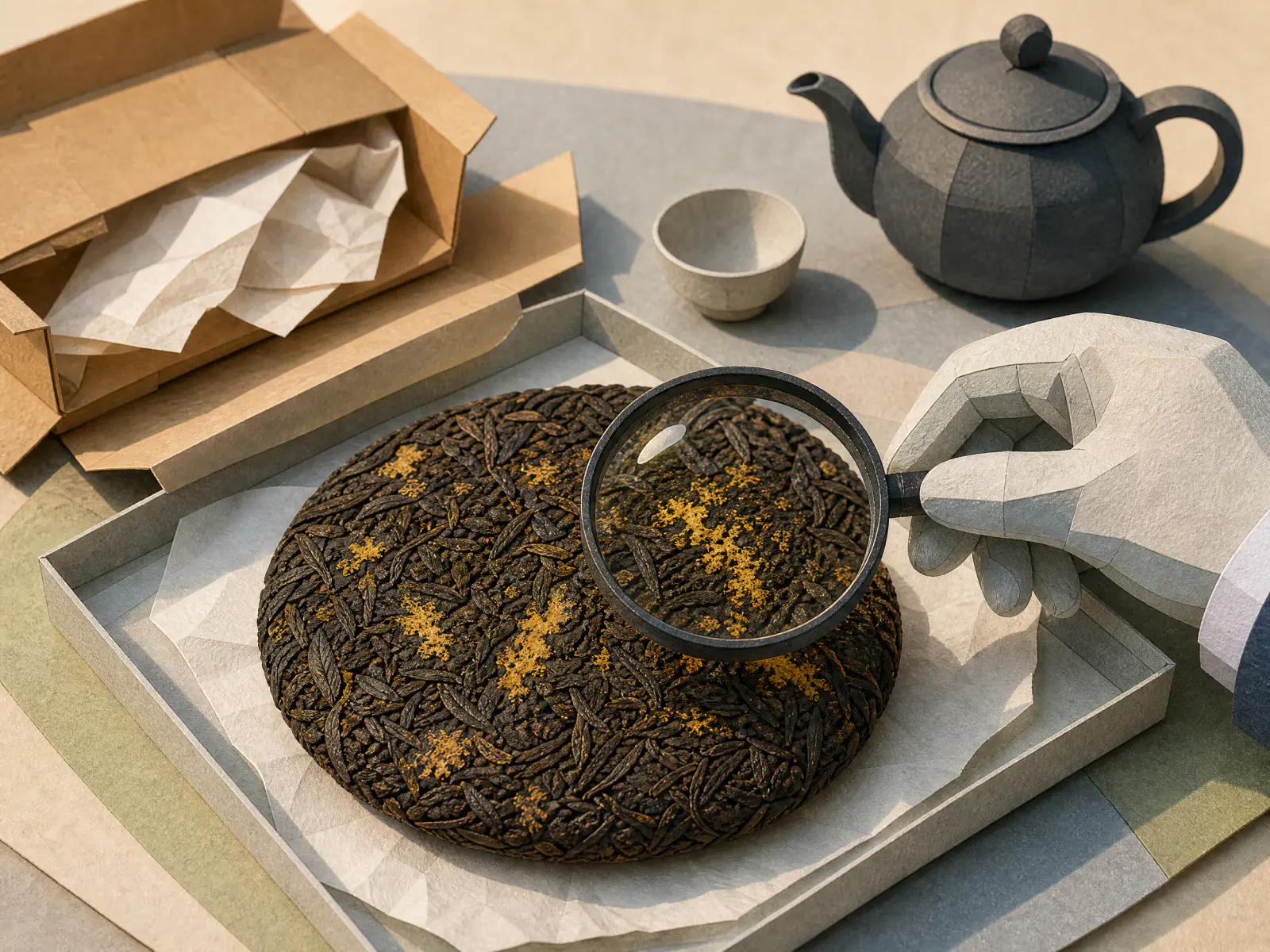
I opened a 2024 pu-erh cake and found yellow dots across leaves that looked unusually yellow overall. I sent photographs to the Taobao merchant before brewing it. He checked his stock, found other affected cakes and offered a refund. I didn’t drink it.
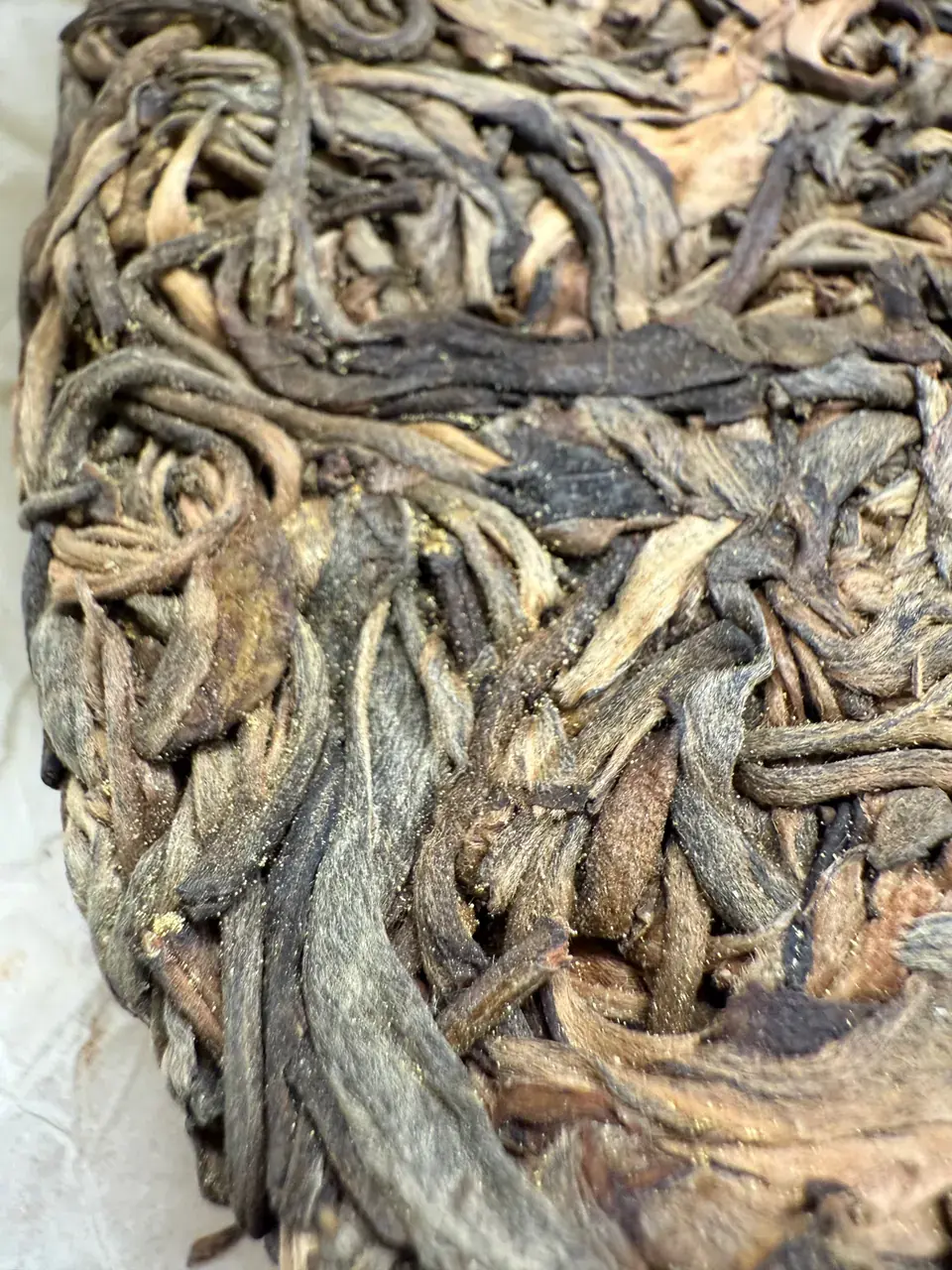
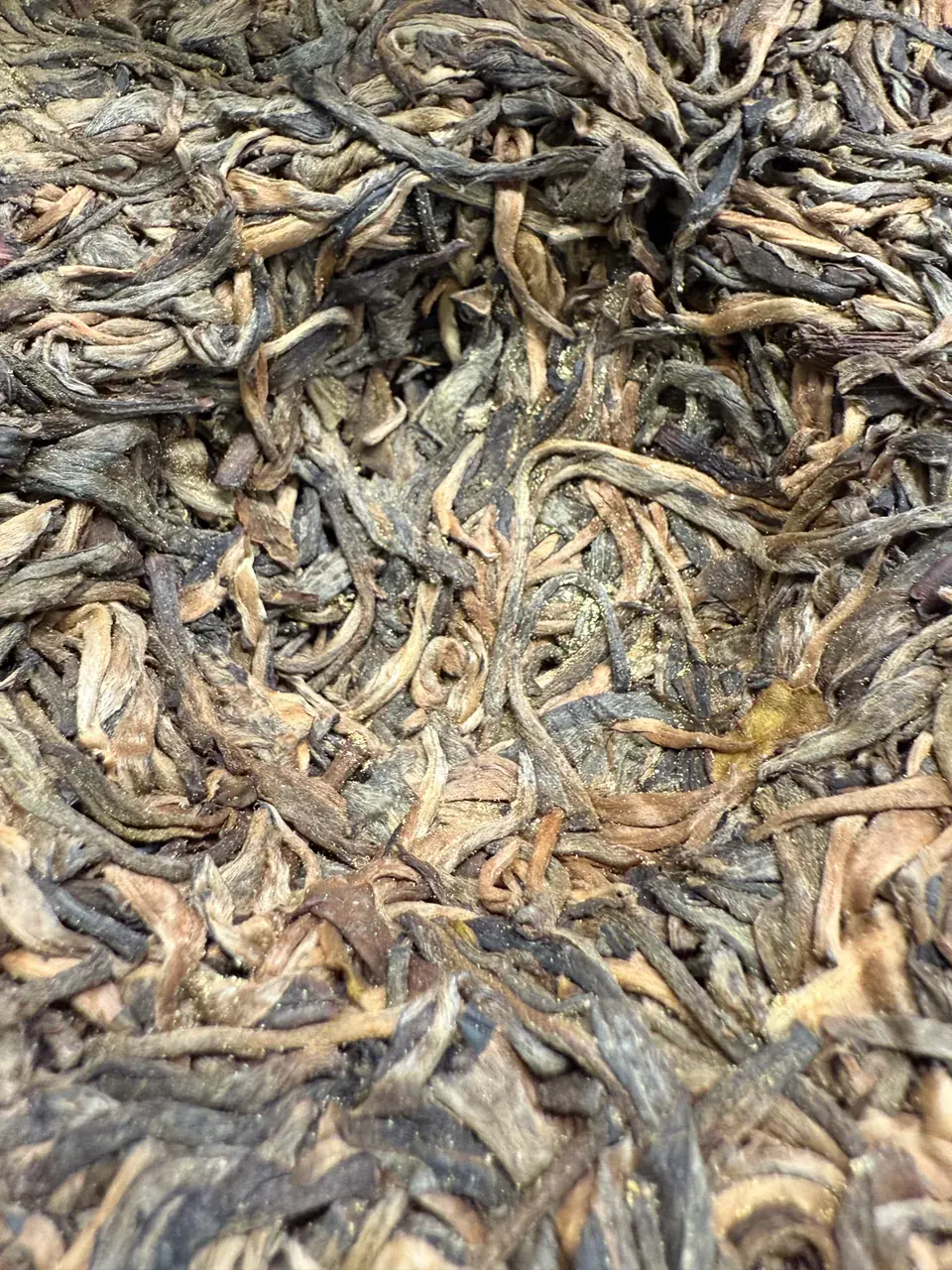
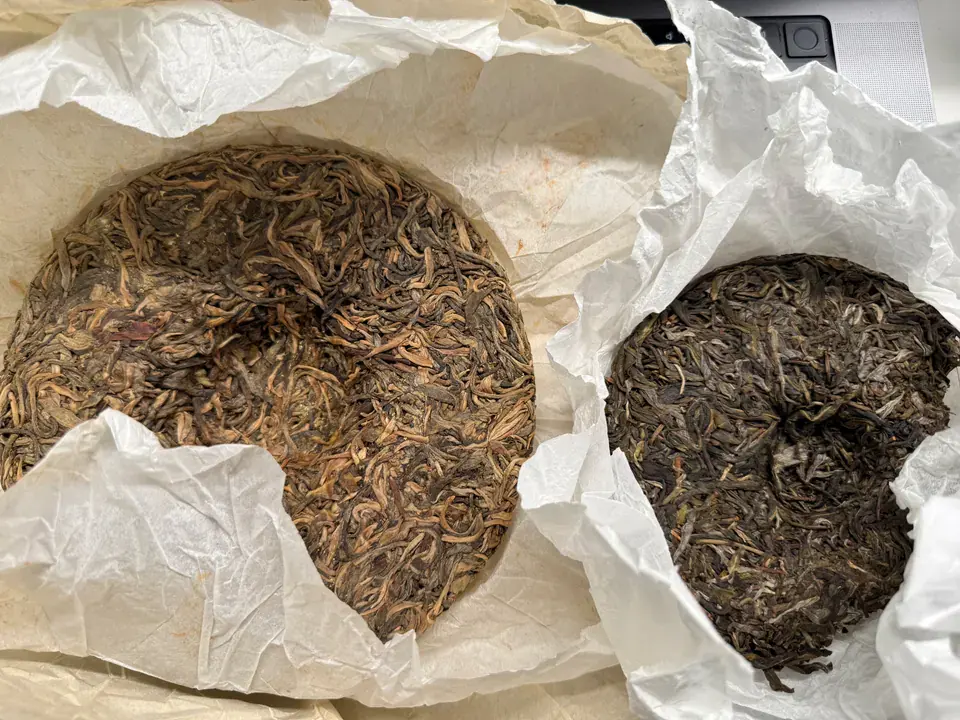
Was it golden flower fungus?
I couldn’t tell from the photographs. “Golden flower,” or jinhua (金花), usually refers to the bloom encouraged during controlled production of certain dark teas, especially Fu brick tea. Papers often identify the fungus as Eurotium cristatum, also called Aspergillus cristatus.
That gave me a search term, but it didn’t identify what was growing on my cake. Yellow colour alone can’t establish a species or whether the tea is safe. The merchant’s finding of a bad batch was enough reason to return it.
This tea came from a Bulang-area livestream seller. The seller review is still being checked before publication.
Why I wouldn’t try a hot rinse
Unexpected fungal growth raises a question about both the organism and any toxins it may have produced. Appearance and smell can’t answer that. A hot rinse isn’t a reliable fix either: WHO notes that many mycotoxins survive food processing.
For an unknown growth, suitable laboratory identification and toxin testing would be needed to answer those questions. I wasn’t going to use a cup of tea as the test. Setting it aside and contacting the seller was straightforward.
Controlled-fermentation studies can explain how known cultures change flavour and chemistry. They can’t certify an unidentified growth on a retail cake, or show that drinking it has a health benefit.
For prevention, the Hong Kong storage guide covers odours, condensation and the difference between humid air and a damp cake.
Reading I saved
- Liu JY and colleagues. Effects of bioactive components of Pu-erh tea on gut microbiomes and health: A review. Food Chemistry. 2021;353:129439. doi: 10.1016/j.foodchem.2021.129439.
- Chemical constituents and biological properties of Pu-erh tea
- Related fermentation research
The forum discussions helped me find the terminology, but none could identify my cake:
- https://www.reddit.com/r/tea/comments/31gqbt/yellow_dots_on_puerh/
- https://www.reddit.com/r/tea/comments/12lstj6/what_are_these_yellow_dots/
- https://www.reddit.com/r/tea/comments/16zv7gi/puerh_cake_is_this_mold/
Quick answers
Frequently asked questions
Are yellow spots on pu-erh always golden flower fungus?
No. Golden-yellow growth can occur during controlled production of some fermented dark teas, especially Fu brick tea, but an unknown spot on a pu-erh cake may have another cause. Colour and a photograph cannot identify a fungal species or establish that a tea is safe to drink.
Can you drink pu-erh with yellow spots?
If the growth is unexpected and its identity is unknown, set the tea aside rather than using a photograph, smell, rinse or forum opinion as a safety test. Ask the seller about the batch and seek a refund or qualified testing. In this case, the merchant confirmed a bad batch, so I did not brew it.
What is golden flower fungus in tea?
Golden flower, or jinhua, is the visible bloom associated with controlled fermentation of some dark teas, particularly Fu brick tea. Research often identifies Eurotium cristatum, also called Aspergillus cristatus, as the dominant fungus. That production context does not identify a random yellow growth found on a retail pu-erh cake.
Can boiling water make mouldy pu-erh safe?
Boiling water is not a reliable way to make an unknown contaminated tea safe. Heat may affect living organisms, but it does not identify the fungus or demonstrate that unwanted metabolites are absent. When storage history or growth is suspicious, replacing the tea is safer than trying to rescue it with a hot rinse.
How can you identify mould on a pu-erh cake?
Appearance and smell can reveal reasons for caution, but they cannot identify a fungal species or measure possible toxins. Reliable identification requires appropriate laboratory analysis and, where relevant, toxin testing. Seller batch records and evidence of intentional controlled fermentation provide useful context, but neither replaces testing of an unknown growth.