Yellow Spots on Pu-erh: Investigating Fungal Growth on Tea Cakes
Discovering yellow spots on a 2024 pu-erh cake and researching whether it's beneficial or harmful fungal growth
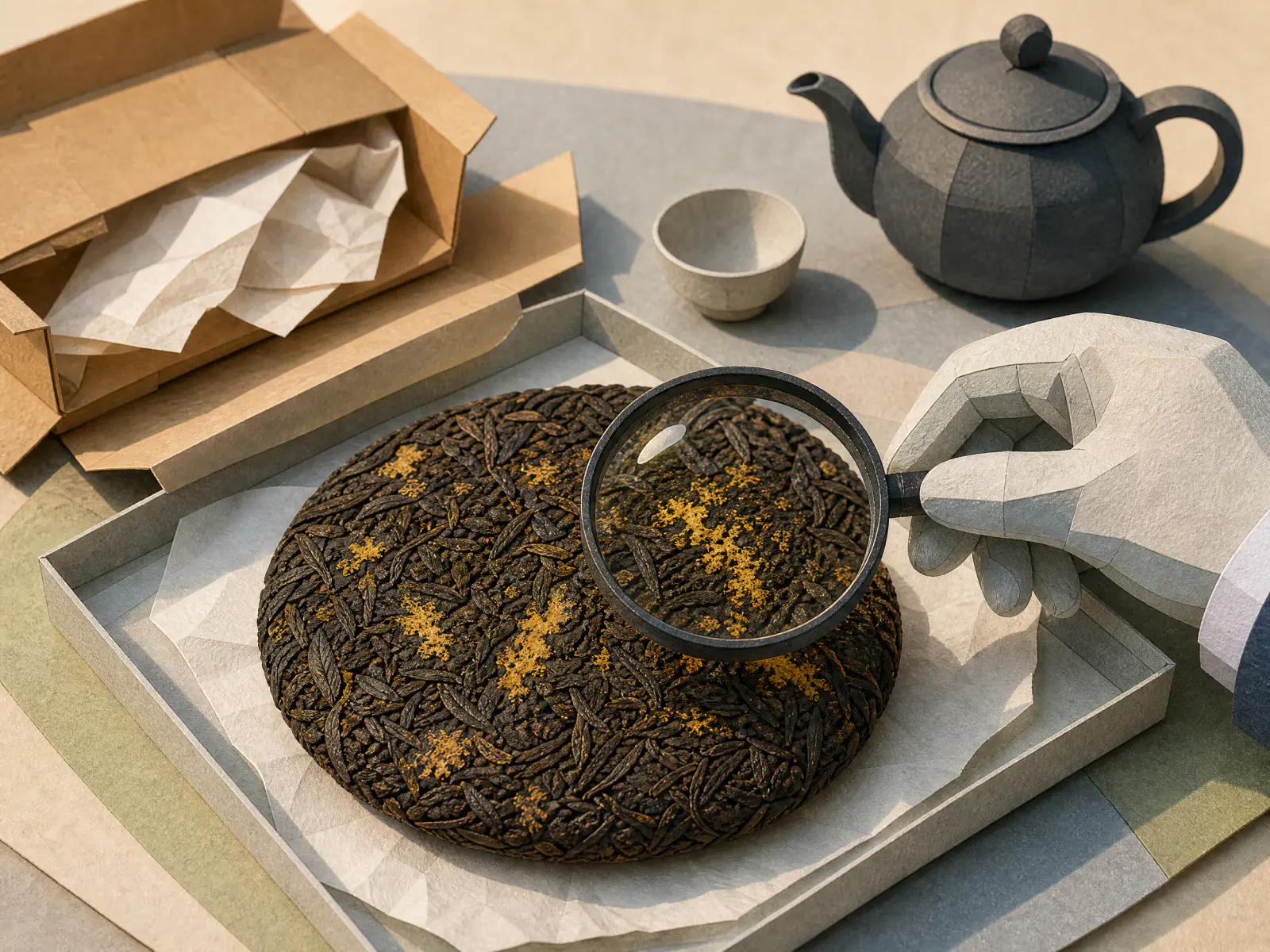
I opened a new cake today and immediately thought, “That looks a bit too yellow.” The leaf had an overall yellow cast, plus little yellow dots across the surface. Interesting, yes. Something I wanted to drink without checking, no.
Are yellow spots on pu-erh always golden flower fungus?
No. Golden-yellow growth can occur during controlled production of some fermented dark teas, especially Fu brick tea, but an unknown spot on a pu-erh cake may have another cause. Colour and a photograph cannot identify a fungal species or establish that a tea is safe to drink.
This was a 2024 pu-erh. Forum discussions suggested two broad possibilities: unwanted fungal growth, or a fungus that can add flavour to certain fermented teas. A photograph could not reliably tell me which one I had, so I kept looking.
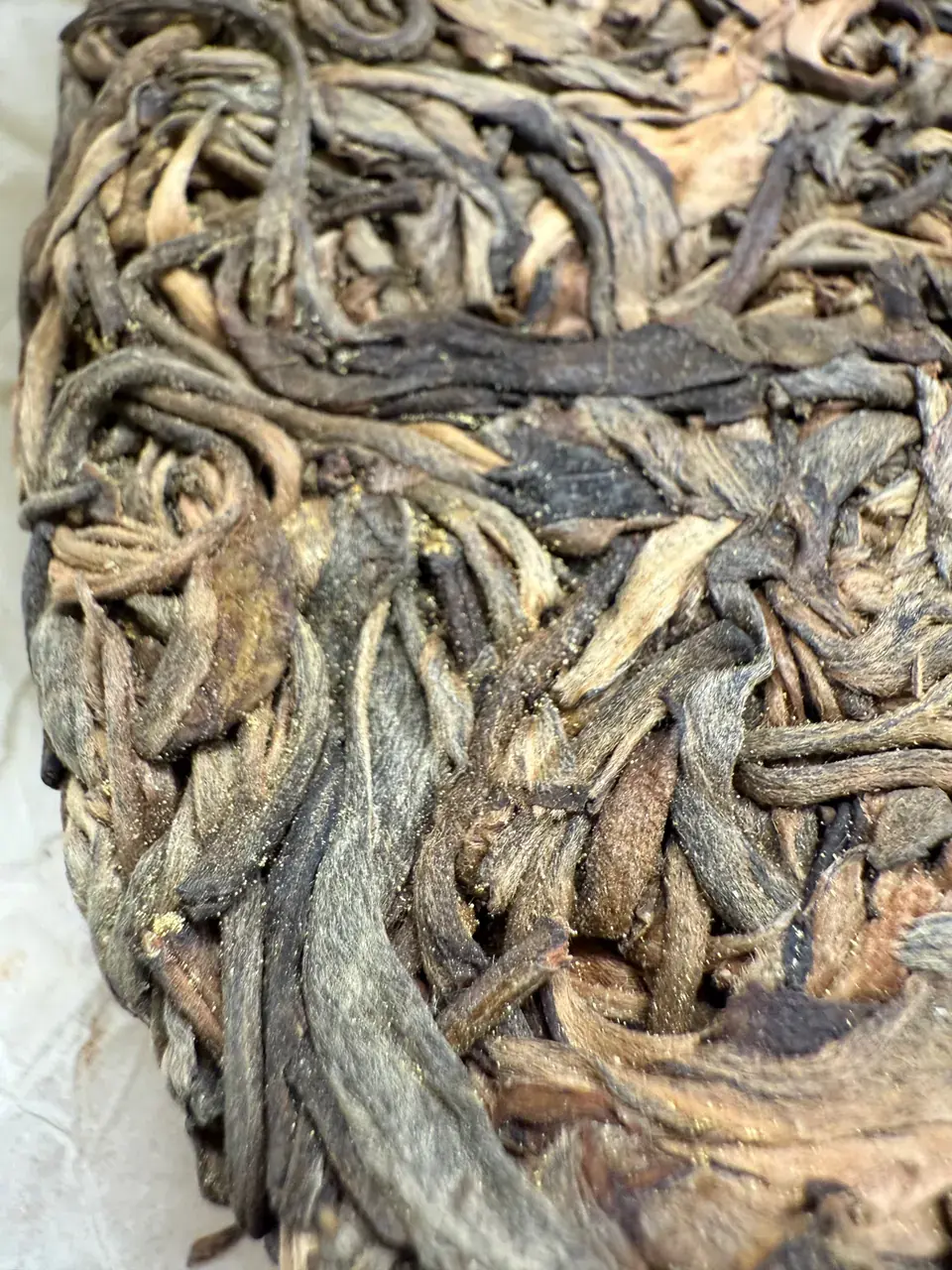
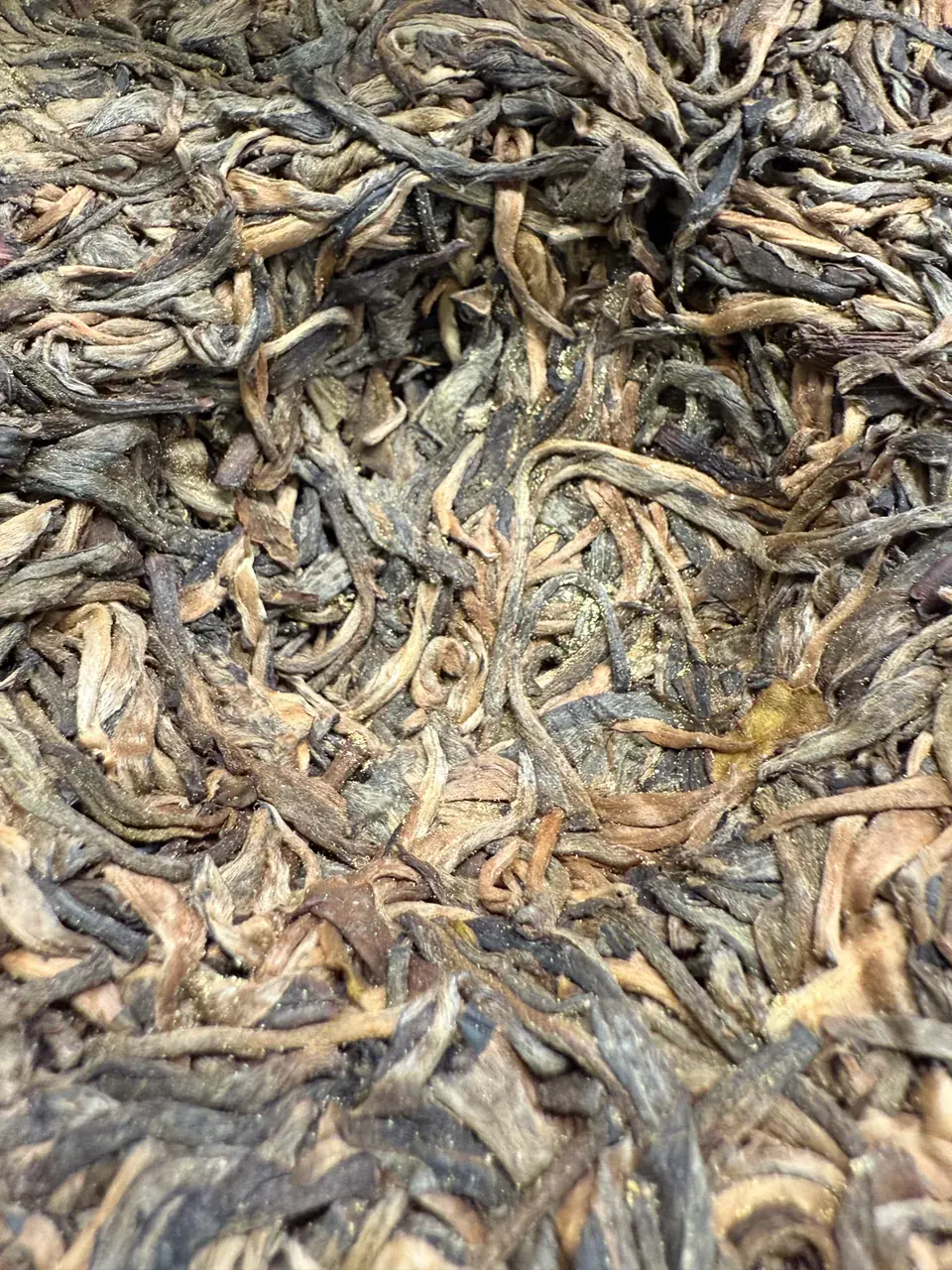
The whole cake looked more yellow than I expected. These closer photographs show how far the discolouration had spread:
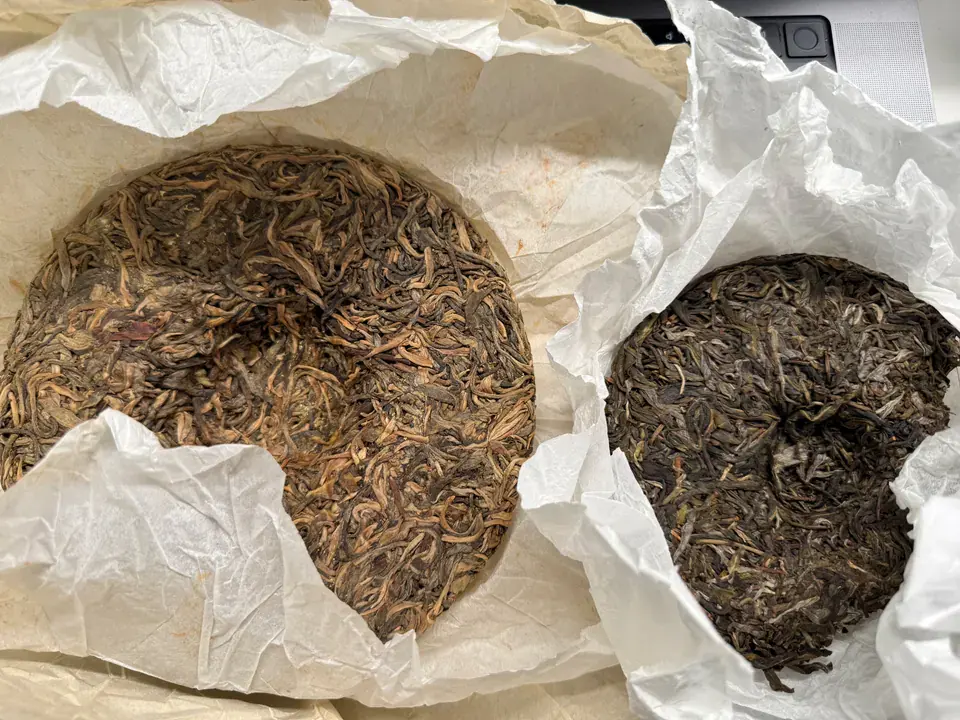
What the merchant said
The Taobao merchant checked his batch that day, found that some of the other cakes were also bad, and offered me a refund. That made the decision easy. I was not going to brew this one.
Merchant note: This tea came from a Bulang-area livestream seller; the seller review is still being verified before publication.
What should you do with suspicious yellow spots?
If the growth is unexpected and its identity is unknown, set the tea aside rather than using a photograph, smell, rinse or forum opinion as a safety test. Ask the seller about the batch and seek a refund or qualified testing. In this case, the merchant confirmed a bad batch, so I did not brew it.
| What you know | What it can tell you | What it cannot prove |
|---|---|---|
| The tea was intentionally made to bloom under a documented dark-tea process | The growth has a relevant production context | That this particular tea is uncontaminated or suitable for you |
| The seller finds the same unexpected growth across a batch | There may be a batch or storage problem worth returning | Which organism is present |
| The spots look yellow or golden in a photograph | Where the discolouration is visible | Species, toxin status or safety |
| The cake smells normal after a rinse | Very little beyond your sensory impression | That unwanted fungi or metabolites are absent |
What I learned before putting the kettle on
Many strains of fungi and bacteria can grow on tea, and there is no simple home assay that identifies them. You need more advanced testing. The main health worry is not just seeing fungus; it is the possibility that a fungus has produced mycotoxins. Without identifying the species and testing the tea, it is hard to know how much, if any, is present. Boiling water does not simply remove mycotoxins. That concern sits behind many of the claims linking mouldy tea with cancer.
Tea research gets complicated because several fungal and bacterial species can be present at once, and that mixture can change over time. It helps explain why the information online can sound so contradictory.
These were the references I saved while reading:
- Liu JY, He D, Xing YF, Zeng W, Ren K, Zhang C, Lu Y, Yang S, Ou SJ, Wang Y, Xing XH. Effects of bioactive components of Pu-erh tea on gut microbiomes and health: A review. Food Chemistry. 2021 Aug 15;353:129439. doi: 10.1016/j.foodchem.2021.129439. Epub 2021 Mar 3. PMID: 33743430.
- Chemical constituents and biological properties of Pu-erh tea
- Related ScienceDirect research
I am keeping this post as a notebook for future research. I found useful background, but not enough information to identify the growth on my cake.
What is golden flower fungus in tea?
Golden flower, or jinhua, is the visible bloom associated with controlled fermentation of some dark teas, particularly Fu brick tea. Research often identifies Eurotium cristatum, also called Aspergillus cristatus, as the dominant fungus. That production context does not identify a random yellow growth found on a retail pu-erh cake.
“Golden flower” (金花, Jin Hua) is a visible fungal growth found in some fermented dark teas, particularly Fu brick tea, which is closely related to pu-erh. It appears as golden-yellow specks or blooms during post-fermentation. The main fungus identified in academic papers and related sources is Eurotium cristatum, also called Aspergillus cristatus in its anamorph form. It takes part in microbial fermentation and can change the tea’s flavour, aroma, and chemical profile.
Eurotium cristatum is a xerophilic fungus, meaning it can live in dry conditions. Researchers commonly isolate it from Fu brick tea and other dark teas such as pu-erh. It is the dominant strain during the “blooming” or “flowering” stage, when the recognisable golden spores form.
Controlled studies report changes in catechins, amino acids, and aroma after tea is deliberately inoculated with E. cristatum. That tells us about fermentation chemistry, not whether an unknown growth is safe or whether drinking the finished tea will improve anyone’s health. Researchers have also identified related species such as Eurotium repens in some Yunnan jinhua teas, which is another reason a photograph alone cannot settle the identification.
Some producers use spore content as a manufacturing quality marker, and traditional dark-tea production intentionally encourages this fungus under controlled conditions. That is very different from random mould appearing after poor storage.
Is golden flower fungus safe to drink?
A known culture used in controlled tea production is not the same thing as an unidentified growth on a cake at home. Published fermentation research can describe particular strains and chemical changes, but it cannot certify an unknown retail cake from a photograph. Without trustworthy production context or suitable testing, the safe answer is not to guess.
Fu brick tea can be deliberately fermented with a known culture of Eurotium cristatum. That manufacturing practice is very different from finding an unknown yellow growth on a cake at home. A retailer page and forum discussion can help you recognise the term “golden flower,” but they cannot identify your mould or establish that your tea is safe to drink.
Controlled fermentation studies discuss changes in tea chemistry and possible uses for particular fungal strains. They do not prove that an unidentified growth on a retail cake is harmless, and laboratory findings about compounds are not evidence of a health benefit for the person drinking the tea.
So no, a yellow dot is not automatically “golden flower.” Bad storage can introduce other moulds, and a photo is not enough to tell them apart safely. In my case, the seller had already confirmed a bad batch, so the refund was a much better choice than a risky cup.
For prevention rather than identification, How to Store Pu-erh in Hong Kong Humidity covers odour control, condensation and the difference between humid air and a damp cake.
Can boiling water make mouldy pu-erh safe?
Boiling water is not a reliable way to make an unknown contaminated tea safe. Heat may affect living organisms, but it does not identify the fungus or demonstrate that unwanted metabolites are absent. When storage history or growth is suspicious, replacing the tea is safer than trying to rescue it with a hot rinse.
How can you identify mould on a pu-erh cake?
Appearance and smell can reveal reasons for caution, but they cannot identify a fungal species or measure possible toxins. Reliable identification requires appropriate laboratory analysis and, where relevant, toxin testing. Seller batch records and evidence of intentional controlled fermentation provide useful context, but neither replaces testing of an unknown growth.
Forum threads I checked
- https://www.reddit.com/r/tea/comments/31gqbt/yellow_dots_on_puerh/
- https://www.reddit.com/r/tea/comments/12lstj6/what_are_these_yellow_dots/
- https://www.reddit.com/r/tea/comments/16zv7gi/puerh_cake_is_this_mold/
Quick answers
Frequently asked questions
Are yellow spots on pu-erh always golden flower fungus?
No. Golden-yellow growth can occur during controlled production of some fermented dark teas, especially Fu brick tea, but an unknown spot on a pu-erh cake may have another cause. Colour and a photograph cannot identify a fungal species or establish that a tea is safe to drink.
Can you drink pu-erh with yellow spots?
If the growth is unexpected and its identity is unknown, set the tea aside rather than using a photograph, smell, rinse or forum opinion as a safety test. Ask the seller about the batch and seek a refund or qualified testing. In this case, the merchant confirmed a bad batch, so I did not brew it.
What is golden flower fungus in tea?
Golden flower, or jinhua, is the visible bloom associated with controlled fermentation of some dark teas, particularly Fu brick tea. Research often identifies Eurotium cristatum, also called Aspergillus cristatus, as the dominant fungus. That production context does not identify a random yellow growth found on a retail pu-erh cake.
Can boiling water make mouldy pu-erh safe?
Boiling water is not a reliable way to make an unknown contaminated tea safe. Heat may affect living organisms, but it does not identify the fungus or demonstrate that unwanted metabolites are absent. When storage history or growth is suspicious, replacing the tea is safer than trying to rescue it with a hot rinse.
How can you identify mould on a pu-erh cake?
Appearance and smell can reveal reasons for caution, but they cannot identify a fungal species or measure possible toxins. Reliable identification requires appropriate laboratory analysis and, where relevant, toxin testing. Seller batch records and evidence of intentional controlled fermentation provide useful context, but neither replaces testing of an unknown growth.