Yunnan’s 2026 Spring Tea Weather
Rain came when it wanted, not where it was expected. Here's how the 2026 spring season played out across Yunnan's tea mountains — and what it means for the cup.
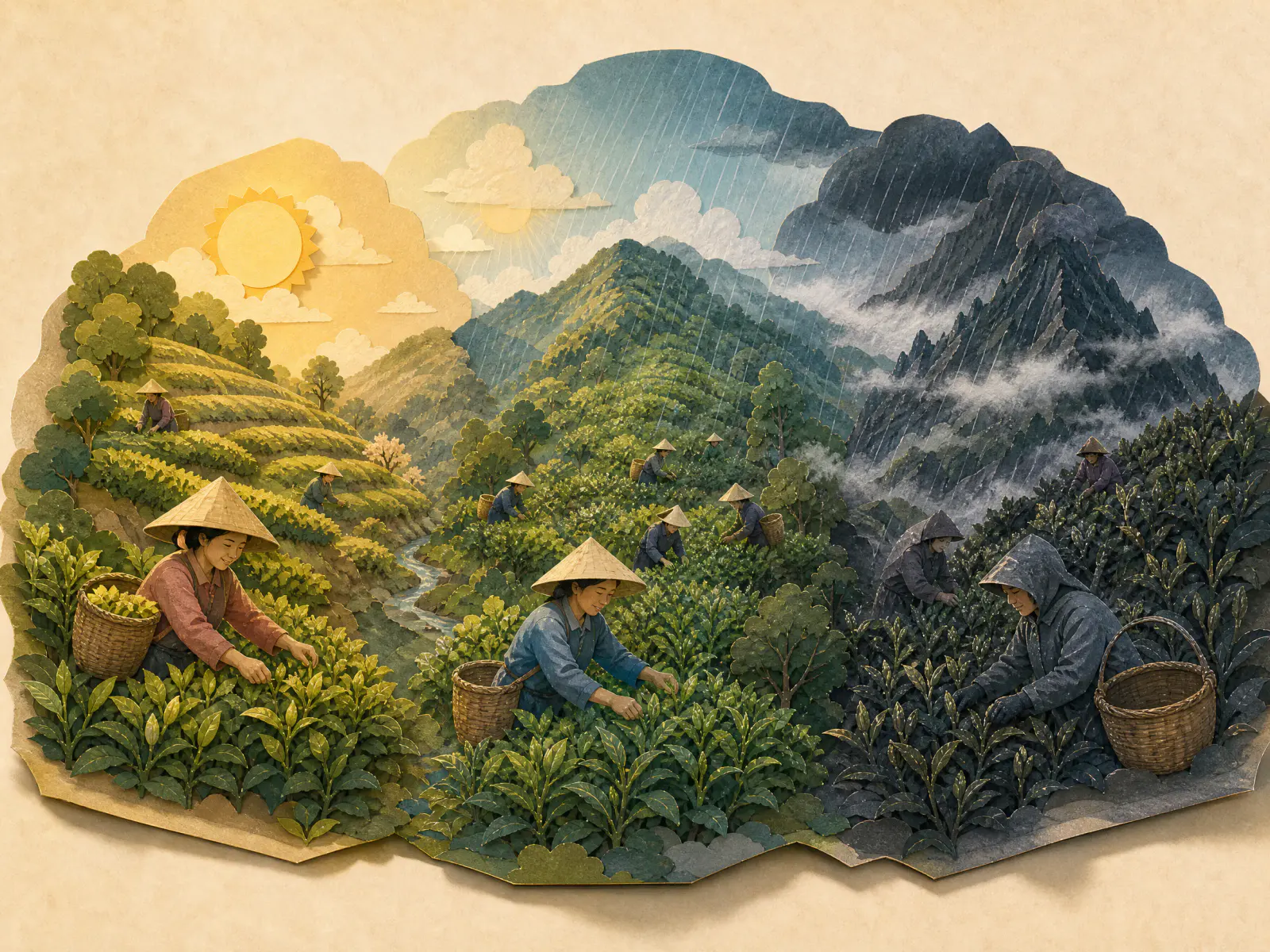
Yunnan’s 2026 spring harvest varied by locality. Changning began picking early after warm weather; Jingmai reported favourable growing conditions; higher gardens around Zhenyuan faced cold and rain delays. A province-wide verdict hides those differences.
The reports below describe harvest timing, production and quoted prices. They don’t provide a matched tasting of the regions, so weather alone can’t tell us which 2026 tea tastes best.
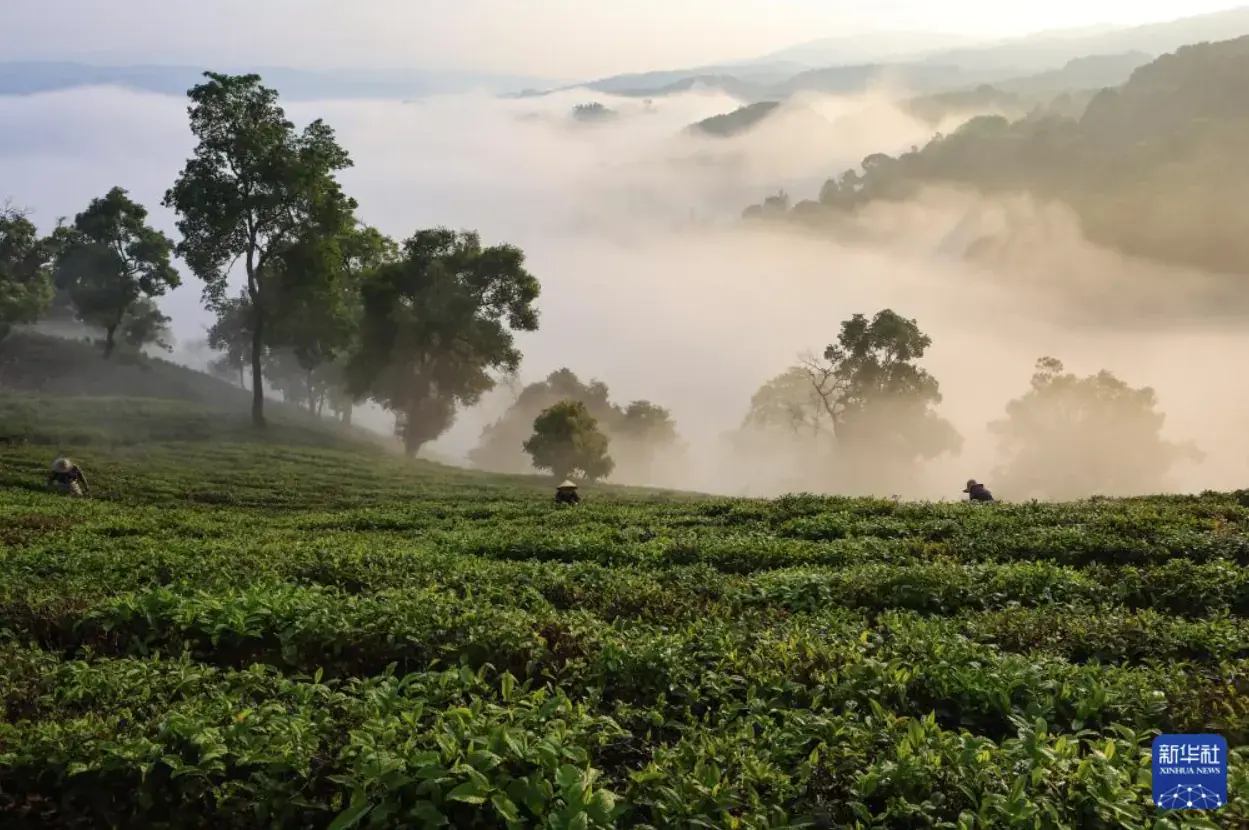
Mist over Menghai’s tea gardens, mid-March 2026. Photo: Li Yunsheng/Xinhua, via Yunnan Daily.
Changning picked early
Baoshan municipal reporting put the start of picking at 27 February, with warm conditions encouraging the early-budding Huangdan cultivar. Fresh leaf was reported at about RMB30/kg, roughly level with the previous two years. A separate ancient-tree harvest report quoted finished tea at RMB1,500 to 2,000/kg.
Those prices refer to different products. Neither establishes a general flavour profile for Changning’s spring crop.
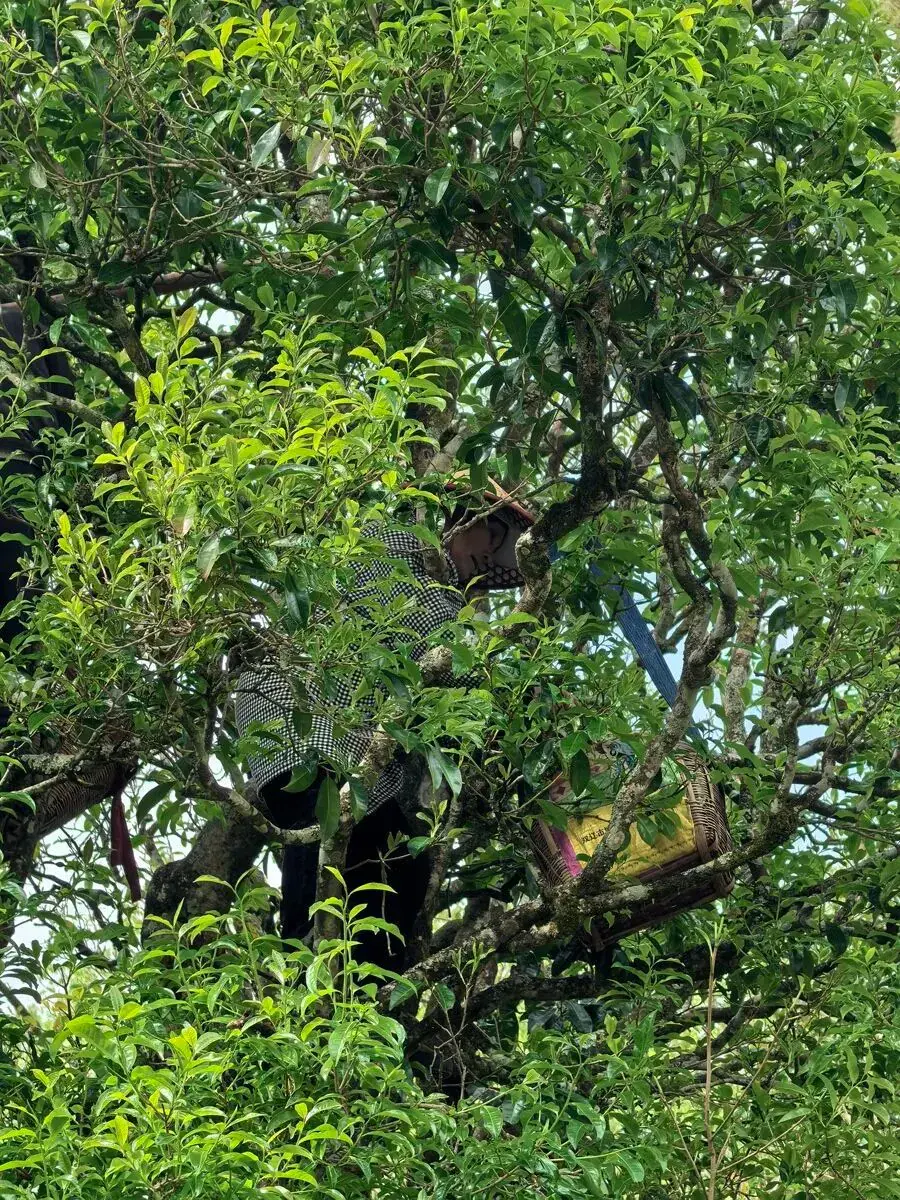
Ancient-tree harvest in Changning, April 2026. Photo: Baoshan municipal government.
Jingmai expected a strong harvest
An early-April report described even rainfall and stable temperatures. It projected a 3,947-tonne spring harvest across 114,800 mu of tea land, including 511 tonnes of ancient-tree material, with output value around RMB397 million.
These were season projections, not final totals. They support an account of favourable growing conditions; they don’t show that every Jingmai lot was fuller or sweeter than the previous year’s tea.

Jingmai Mountain in early April. Image: Lancang County Media Center/Xinhua, via Xinhua.
Zhenyuan faced delays
Reports from Zhenyuan described cold spells and persistent rain delaying picking in some higher Wuliang gardens by more than a week. That can complicate harvest and processing schedules, but the reports don’t establish a common taste for the affected teas.
For a specific lot, the picking date and drying conditions would be more useful than assuming that a delayed harvest must taste thin or bitter.
More leaf didn’t mean higher prices
Menghai was picking by mid-March. Broader season reporting described increased output in the main producing areas, with more of the growth coming from plantation and smaller-tree material than ancient trees.
The 24 April price release for 108 Yunnan tea mountains reported prices generally lower, although some famous-origin and ancient-tree lots rose more than 15%. Selected procurement indications included:
| Origin | Reported category | RMB/kg |
|---|---|---|
| Lao Banzhang | Ancient tree | 8,500 |
| Lao Banzhang | Mixed or large tree | 3,500 |
| Yiwu Bohetang | First class | 25,000 |
| Yiwu Bohetang | Second class | 9,000 |
| Bingdao Laozhai | First class | 35,000 |
| Bingdao Laozhai | Second class | 20,000 |
These are reported categories and procurement indications. They aren’t prices for all tea from those places, and they shouldn’t be compared directly with finished retail cakes.
In Shuangjiang, April reporting emphasised quality control and geographical-indication protection. That is useful context for Bingdao’s premium: growing conditions are only one part of what buyers are paying for.
Buying a 2026 spring tea
Ask when the leaf was picked, which garden or village supplied it, how it was processed and whether the sample matches the batch for sale. Keep product stage and material category consistent when comparing prices.
Weather reports help explain a harvest. I’ll still want to taste the tea before deciding whether it was a good year for that cake.
Sources
- Yunnan spring 2026 climate outlook, China Weather/Yunnan
- Jingmai spring production and growing conditions, Yunnan Department of Agriculture and Rural Affairs
- Jingmai harvest report, Xinhua
- 2026 Yunnan spring-tea season assessment, Hong Kong Commercial Daily
- Menghai spring harvest photographs, Yunnan Daily/Xinhua
- Zhenyuan 2026 spring-tea review
- Lincang/Shuangjiang spring-tea industry report
- Changning early spring harvest and fresh-leaf prices, Baoshan municipal government
- Changning ancient-tree harvest and prices, Baoshan municipal government
- Officially reported prices for 108 Yunnan tea mountains, China News Service
- Indicative 2026 village-level price reporting, Yunnan rural information service
Photo-rights note: photographs displayed with source attribution. Permission and licensing should be confirmed with the originating publishers before reuse elsewhere.
Quick answers
Frequently asked questions
Was Yunnan's 2026 spring tea weather the same everywhere?
No. Timing and conditions differed across producing areas. Broad statements about a good or bad Yunnan spring hide local differences in warmth, rainfall, harvest timing and yield.
Does difficult weather always make better tea?
No. Stress, slower growth and lower yield can affect concentration, but excessive rain, cold, drought or delayed picking can also reduce quality. Processing and the specific lot still matter.
How should a buyer use a seasonal weather report?
Use it as context for harvest timing, yield and possible style differences, then ask about the exact village, picking date and batch. Weather cannot predict the taste or quality of every cake from a region.