Yunnan 2026: The Roads Behind the Tea Names
Five days between Menghai and Yiwu, following Lao Banzhang, Mengsong and Guafengzhai from famous names back to gardens, village roads and the long night of making tea.
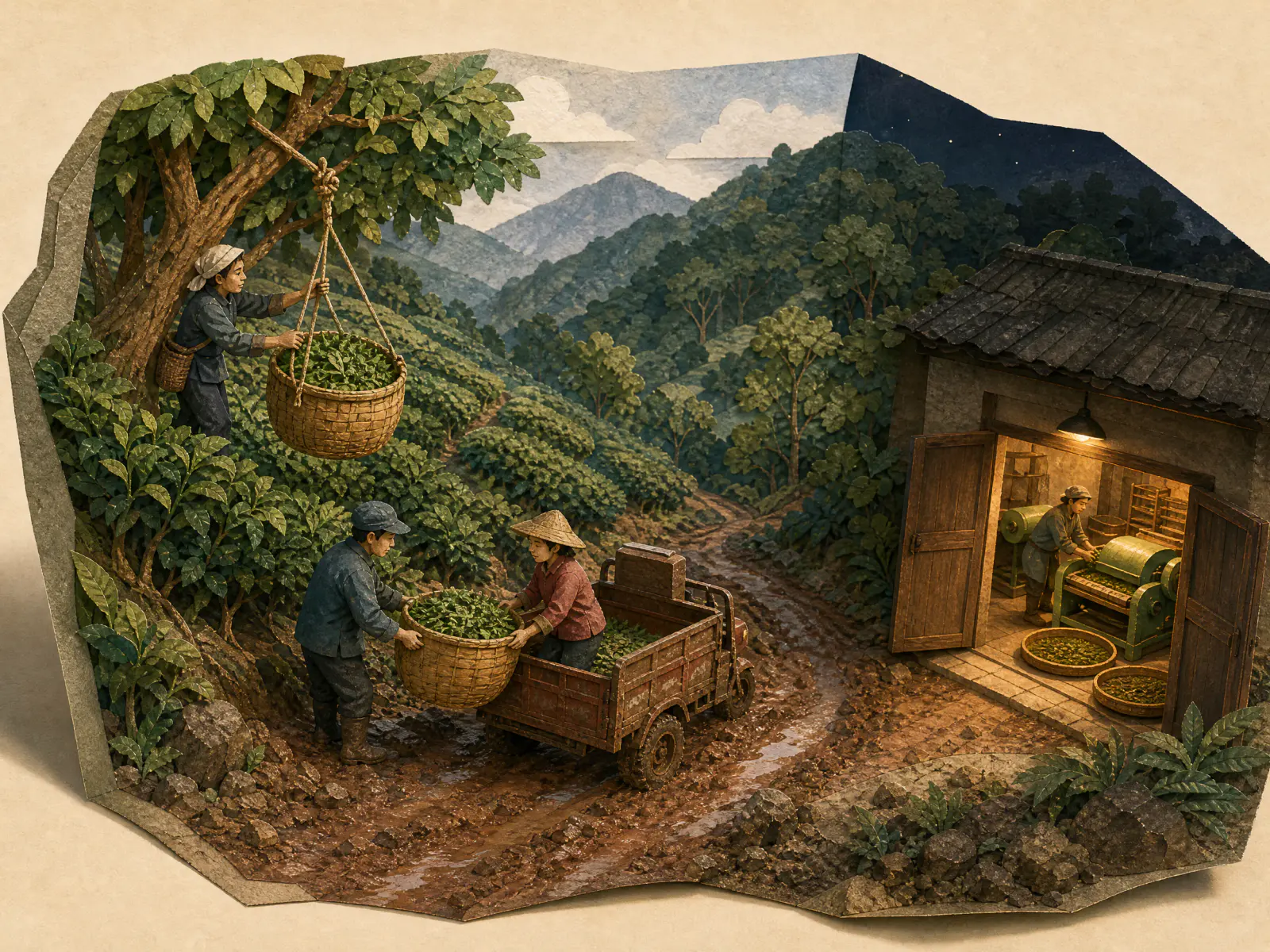
From 31 March to 4 April, I travelled from Shenzhen to Xishuangbanna, visited the Bulang Mountain and Mengsong areas, then crossed east to Yiwu and Guafengzhai. The photographs follow tea from steep gardens to baskets, drying mats and a processing room still busy after dark.
I use the photographs’ GPS data where it supports a location. Where it is incomplete or wrong, the label stays broad. In particular, the river-road photographs from 4 April belong to the Huanglianshan-area route south of Yiwu, not to the previous day’s Guafengzhai visit.
The route
| Date | Route | In the notebook |
|---|---|---|
| 31 March | Shenzhen Bao’an to Xishuangbanna | Flights and the start of the drive |
| 1 April | Bulang Mountain township, Menghai County | Gardens near Lao Banzhang, fresh leaf and dinner |
| 2 April | Mengsong township, Menghai County | Forest gardens at roughly 1,900 to 2,070 metres, drying leaf and maocha |
| 3 to 4 April | Yiwu, Guafengzhai and the Huanglianshan area | Village visits, stream crossings and night processing |
Near Lao Banzhang
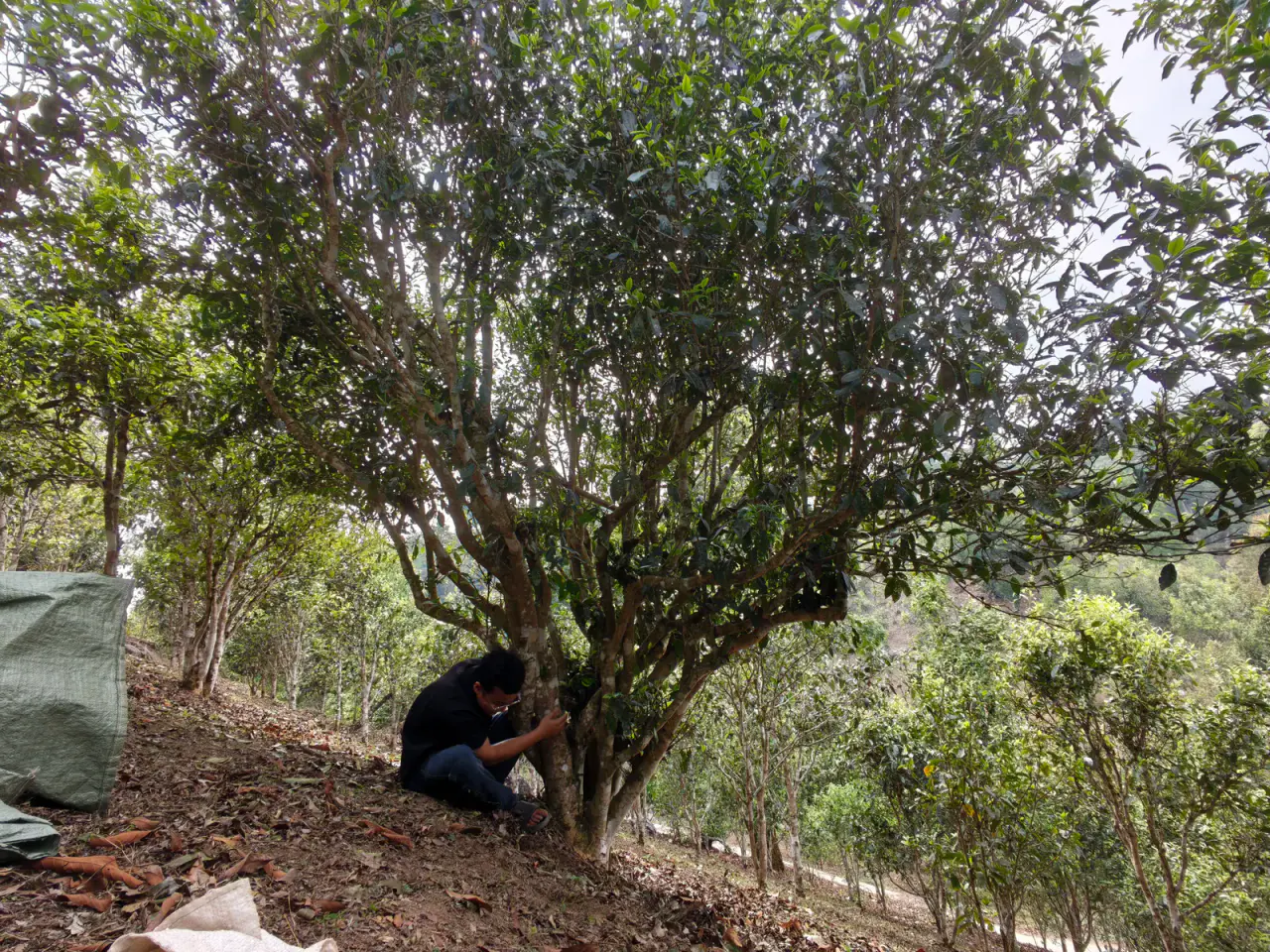
The gardens were dry and steep. Several trees had heavy trunks rising from the base, with picking cloths and carrying sacks beside them. The slope made even standing for a photograph awkward.
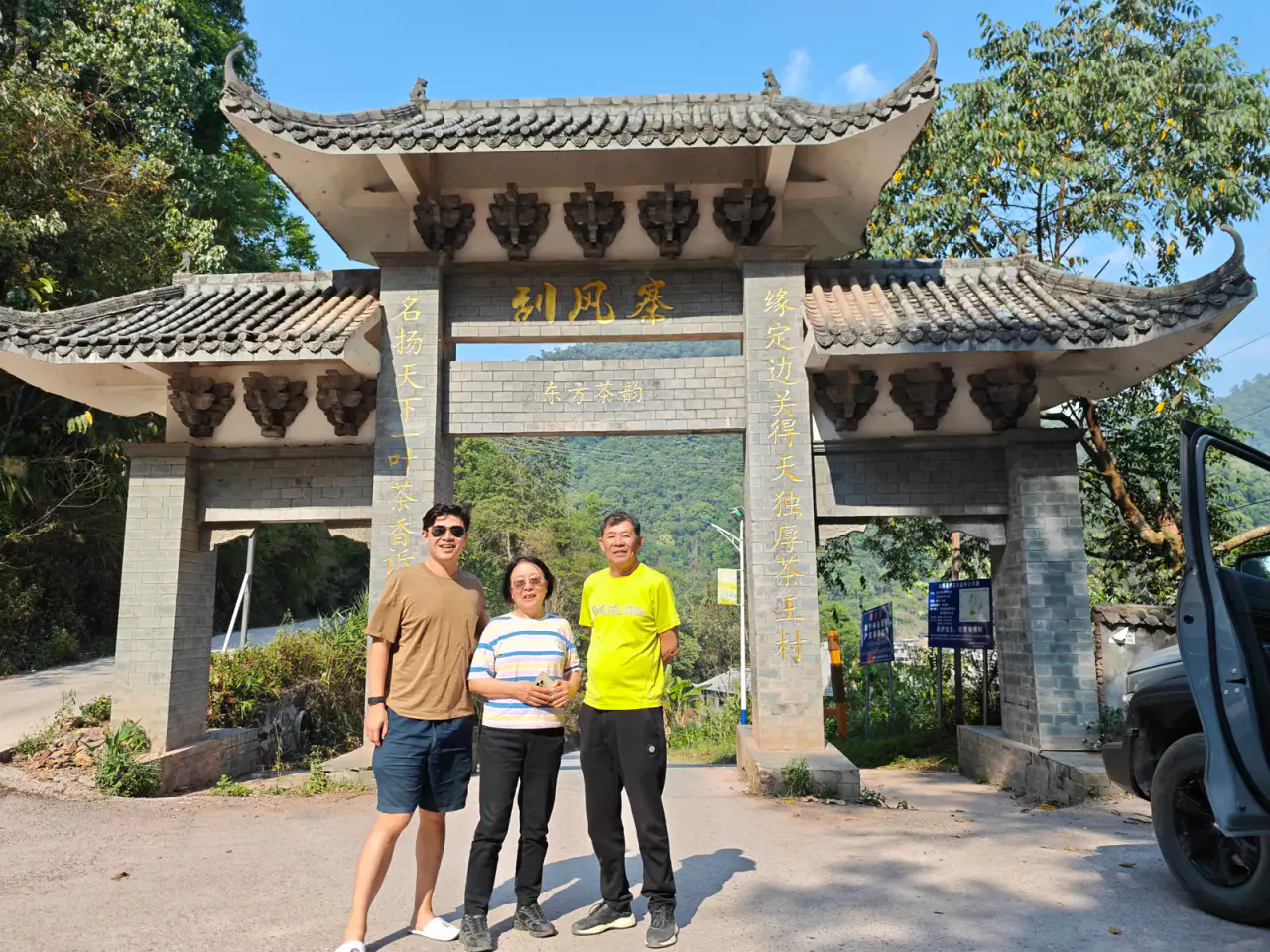
Later we saw fresh leaf, reached the village gate and sat down to dinner. I wanted to keep that sequence together: it records more of the day than a photograph of one impressive tree.
Read A Day Near Lao Banzhang.
Up into Mengsong
The next day’s garden had a mixed canopy, narrow paths and bright new shoots against darker forest. The phone’s altitude readings climbed above 1,900 metres and briefly passed 2,070.
The pictures show tea growing among other trees. They can’t establish tree age or cup quality, but they do preserve the shade, spacing and terrain we walked through.
Read At 2,000 Metres in Mengsong.
Guafengzhai and the river road
We reached Guafengzhai on 3 April. The following day, farther south, a motorbike crossed a shallow stream with a picking basket tied behind the rider. We continued on foot through the water and forest.
By evening we were comparing wet leaf on a tea tray. At night, people were still working beside woks and a rolling machine. Getting to the garden had occupied much of our attention; processing occupied the rest of theirs.
Read From Guafengzhai to the River Road.
I have more photographs of meals, tea rooms and roads, but some locations still need a field note or a better memory. These entries start with the sequences I can place.
Quick answers
Frequently asked questions
Which Yunnan tea areas are covered in these field notes?
The route covers Lao Banzhang and Mengsong in the Menghai area, followed by Yiwu and Guafengzhai east of the Lancang River. It is a five-day personal field record rather than a complete regional survey.
What did the trip change about reading Pu-erh labels?
It made scale and logistics more visible. A famous name may cover a village, several gardens or a wider blend, while road access and the timing of fresh-leaf processing can matter as much as the wrapper story.
Do these visits authenticate tea sold under these names?
No. Visiting a place helps explain geography and production, but it does not verify an unrelated retail cake. Provenance still belongs to the specific batch and its chain of custody.