From Guafengzhai to the River Road
Two days around Yiwu: Guafengzhai’s village gate, a forest road that turned into a stream, and fresh leaf still being processed late at night.
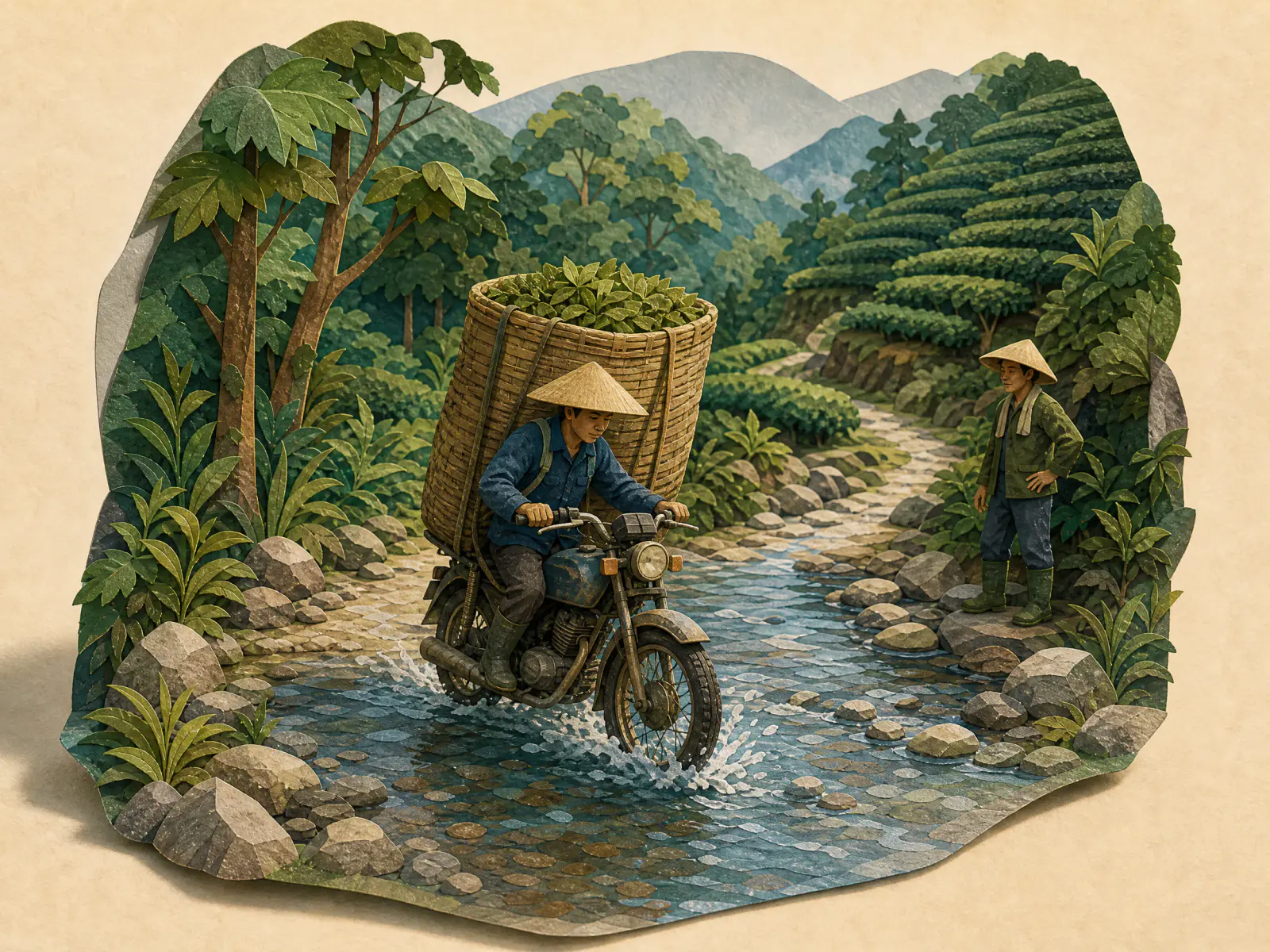
We reached Guafengzhai on 3 April, after road works slowed the drive east from Menghai. We passed through Yiwu town before arriving at the village gate near the Laos border.
The next day’s photographs follow a different route, south of Yiwu toward the Huanglianshan area. I keep the two days separate because the stream crossings and processing photographs shouldn’t all acquire the Guafengzhai name.
An afternoon in Guafengzhai
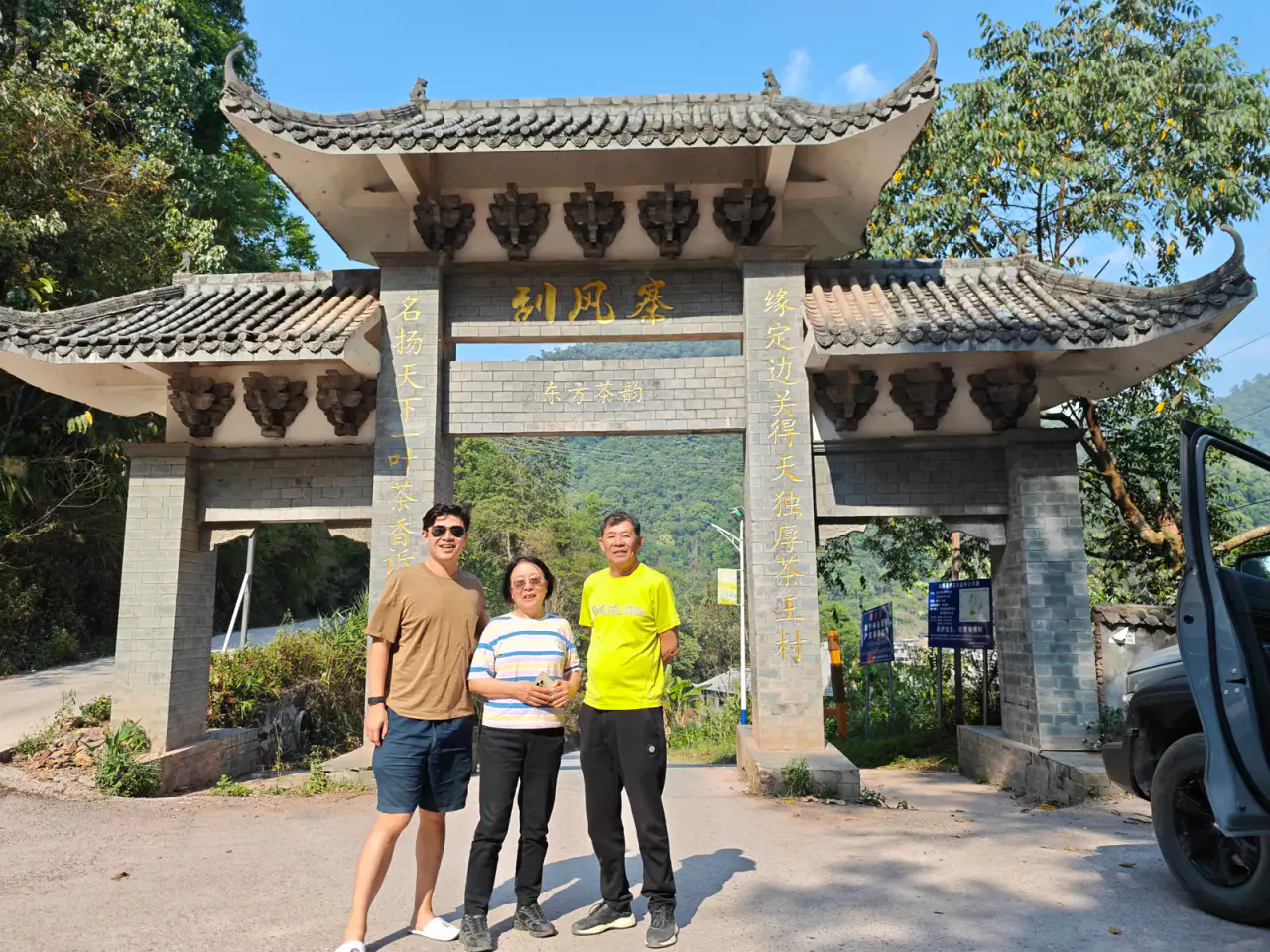
The gate carried large gold characters, with forest rising behind it. Our photograph also caught a vehicle, road signs and a small map. We continued through homes and processing spaces, saw tea cakes on shelves and shared a meal.
The village felt remote, but roads and trade were clearly part of it. I was glad to have photographs of the ordinary rooms as well as the entrance.
Following the stream
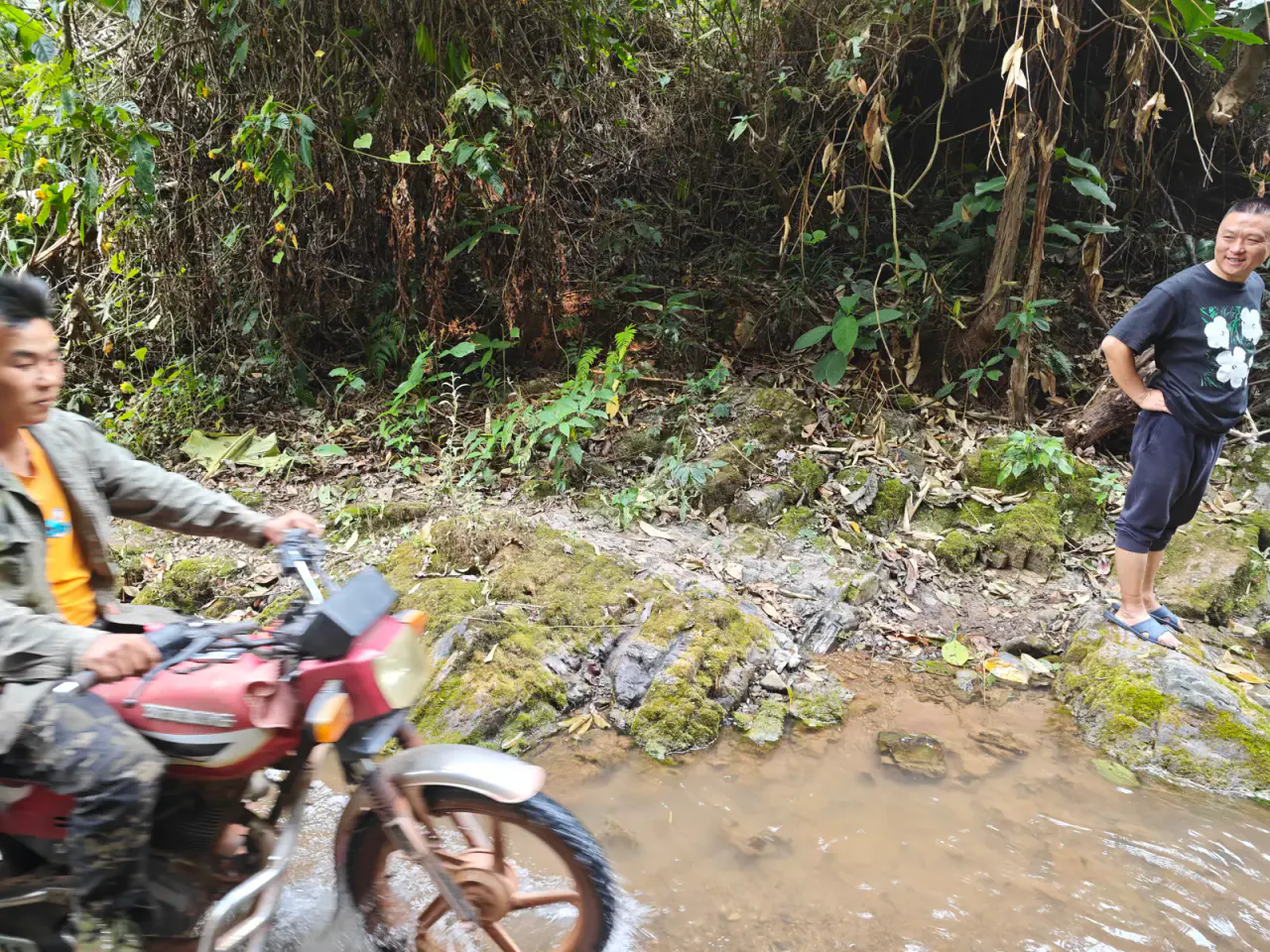
On 4 April, farther south, a motorbike rider crossed shallow water with a woven tea basket tied behind him. Another man waited on the rocks. We followed on foot.
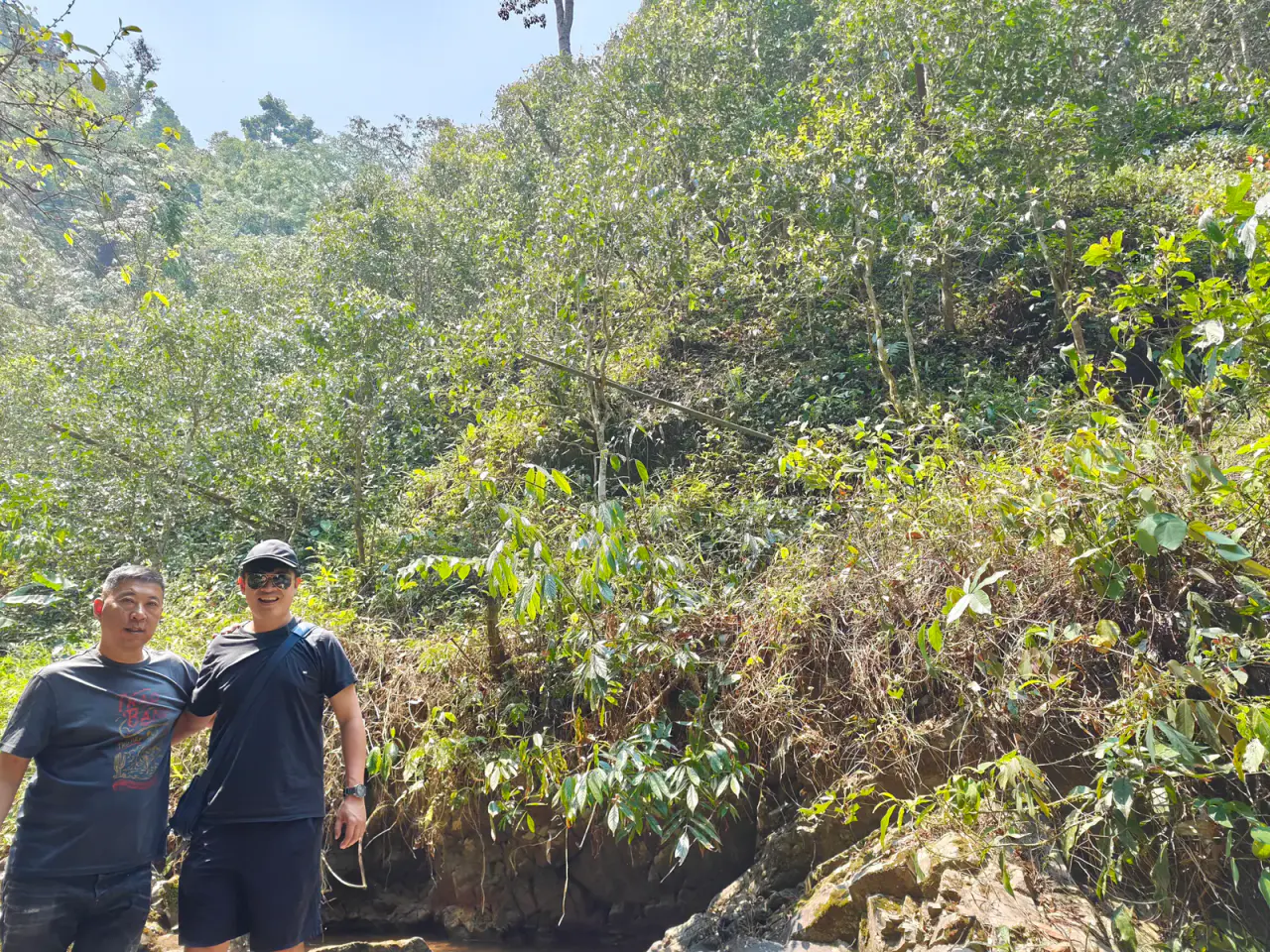
Some stretches were easy to wade through; others narrowed under dense vegetation. Tea plants grew above the banks among other growth. People in the photographs give a sense of the slope that is hard to judge from leaves alone.
Carrying fresh leaf out would mean covering this route again with a load. Watching the rider made the transport more tangible than any description of “remote forest tea.”
Back from the forest
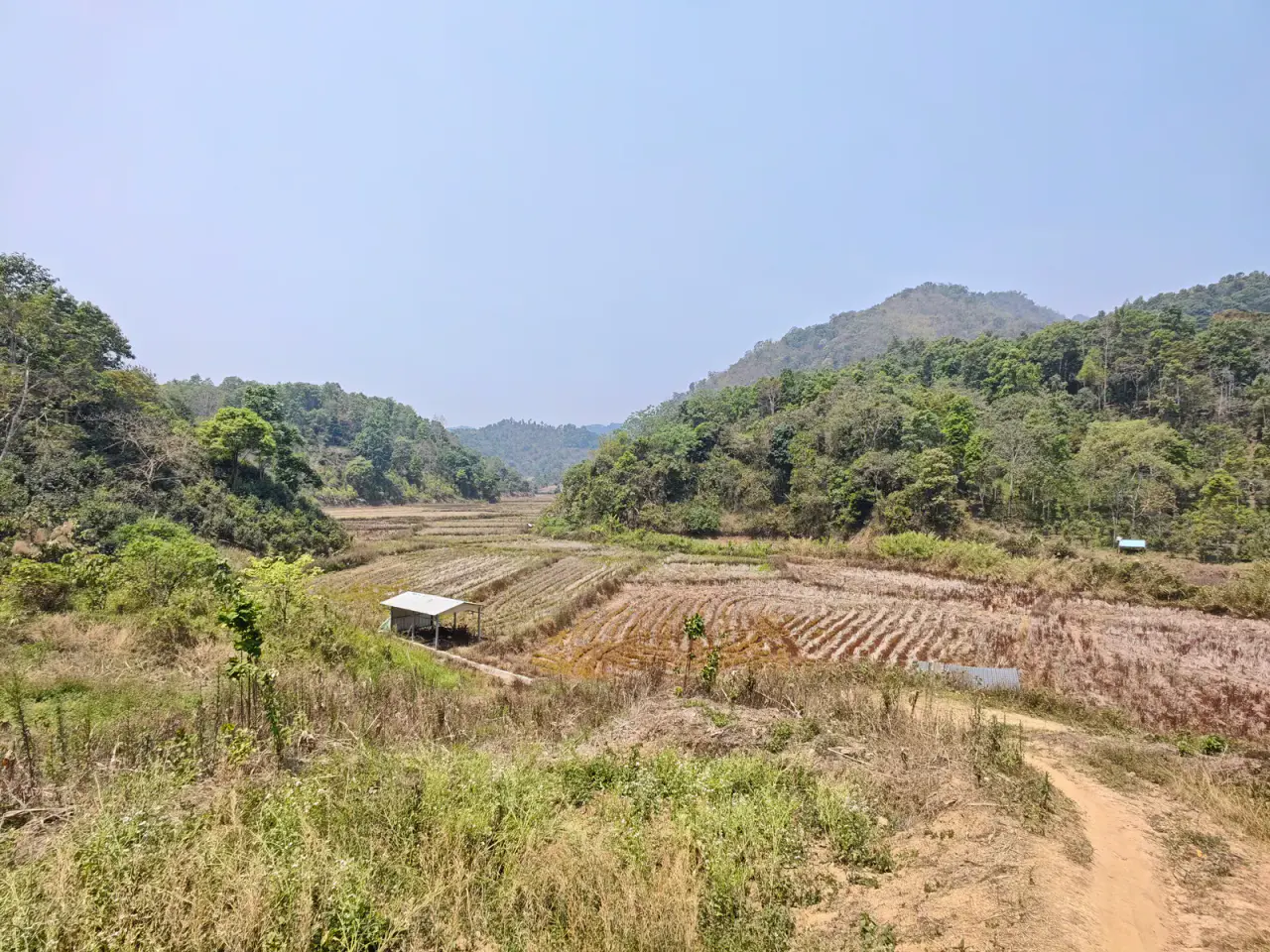
The enclosed path eventually opened into a cultivated valley. Dry rows curved across the floor, with green hills around them. We then returned north toward Yiwu.
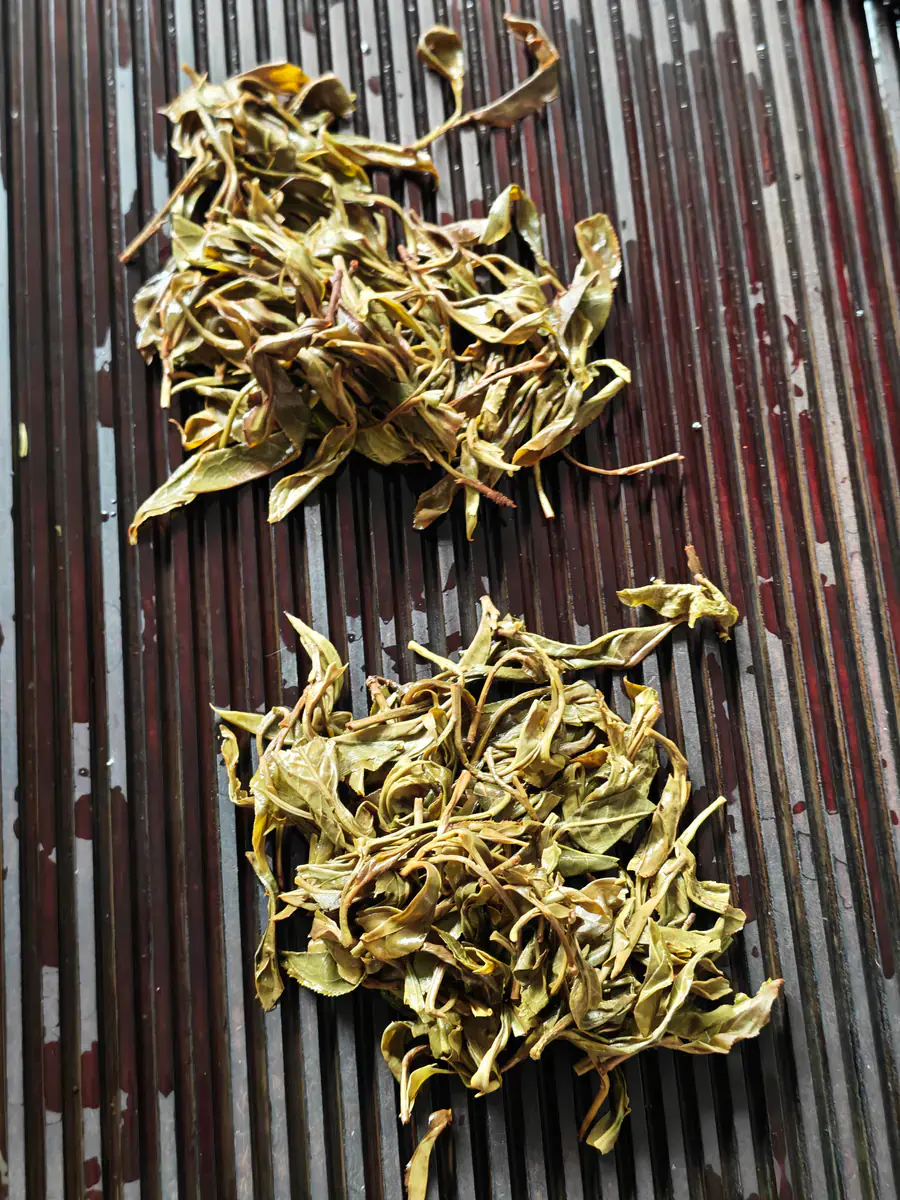
By late afternoon, two piles of wet leaf sat side by side on a dark tray. One was looser and more intact; the other looked denser and more broken. I don’t have the lot notes to name either sample’s village or tree category.
Still processing at night
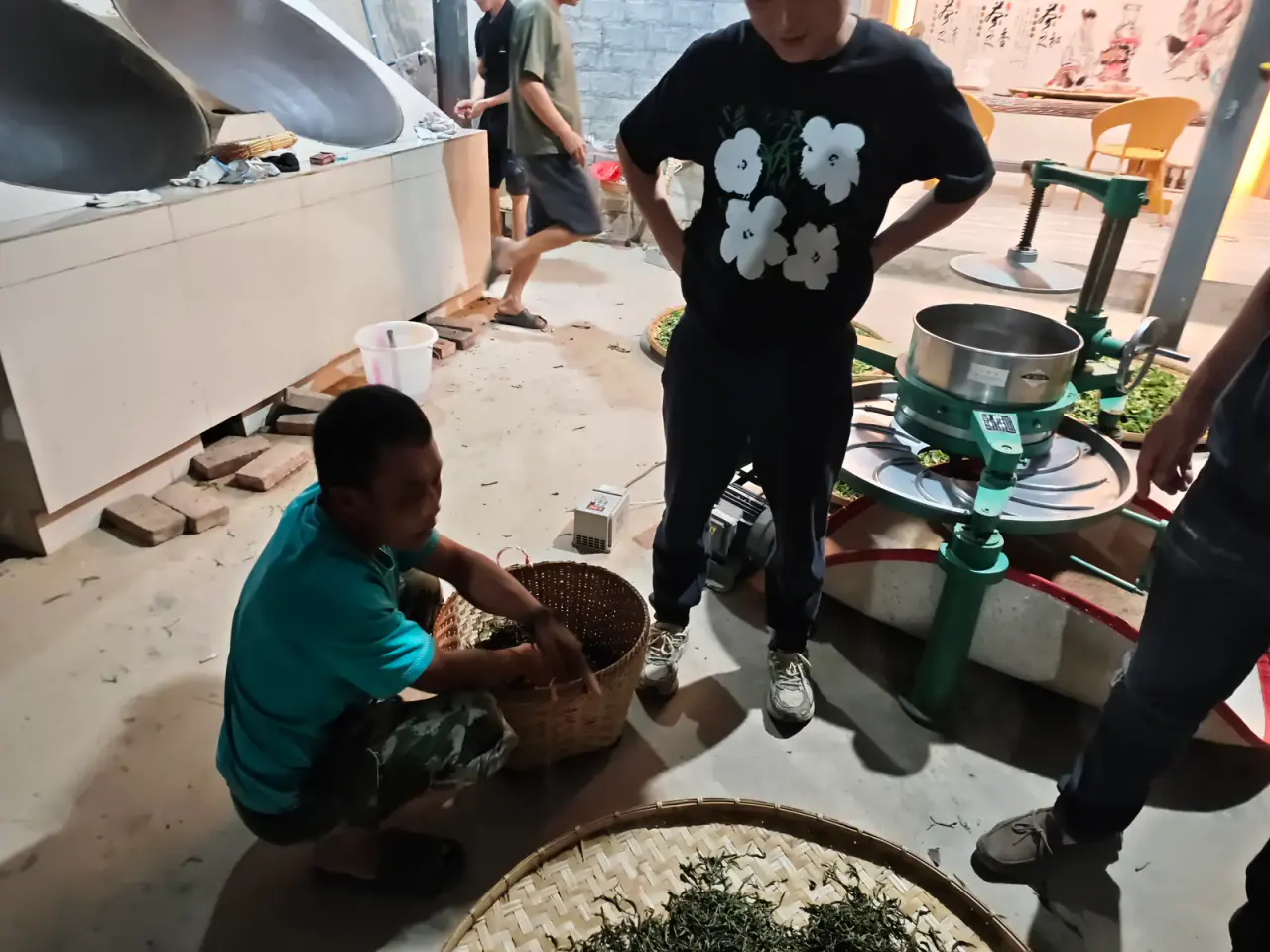
At 9:59 p.m., the camera was still in the processing room. Large woks lined a wall, fresh leaf waited on bamboo trays, and people worked around a green rolling machine.
That is where the photographs end. After a day spent reaching gardens and walking streams, the leaf still had work ahead of it.
Back to Yunnan 2026: The Roads Behind the Tea Names.
Quick answers
Frequently asked questions
Where is Guafengzhai in the Yiwu tea region?
Guafengzhai is a village in the wider Yiwu tea system of Mengla County, Xishuangbanna. Tea sold under its name may come from different garden areas, so the village label is only the first layer of provenance.
Why do roads matter to Pu-erh tea production?
Fresh leaf begins changing as soon as it is picked. Distance, weather, road conditions and transport time affect how quickly it reaches processing and how carefully a remote lot can be handled.
Does visiting Guafengzhai prove a retail tea came from there?
No. A field visit explains the place and its production constraints. Authentication still requires records connecting the specific garden, harvest, processor and finished batch.