Source record 34 of 77
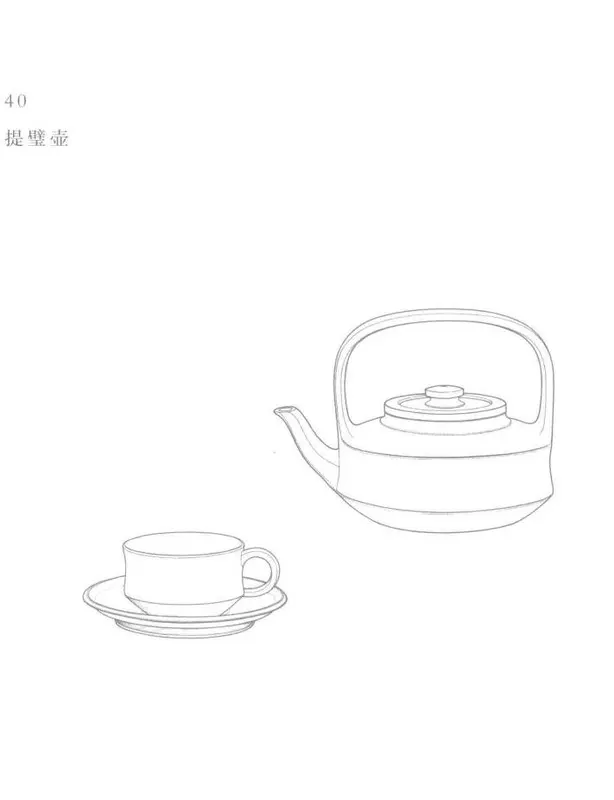
提壁壶
Tí Bì Hú
A concise visual guide to the 提壁壶 Yixing teapot form, with practical notes for tea use and clear limits on identification.
Object label
What the catalogue records.
Working English
Yixing Teapot Collection
Tiliang Bihu (Handled Wall Pot)
Lid seal: Jingzhou Base seal: Gu Jingzhou Period: 1956
---
Lid seal: Gu Jingzhou Base seal: Jingzhou Zhi Hu (Jingzhou Made Pot) Handle seal: Period: Late 1980s
---
Lid seal: Gu Jingzhou Base seal: Jingzhou Qishi Hou Zuo (Made by Jingzhou After Age 70) Period: Late 1980s
---
Lid seal: Gu Jingzhou Base seal: Jingzhou Zhi Hu (Jingzhou Made Pot) Handle seal: Period: Late 1980s
Show extracted Chinese label
+ 地 下滤
各
四届外
40
提人壁壶
提壁壶
盖 印:景 舟 底 印:顾景舟 年 代:1956 年 盖 印 : 顾景舟 底 印:景舟制壶
轰梢印 ;
年 代
上 壶 屋
: 80 年代后期
盖 印: 底 印: 年 代: 盖 印: 底 印: 上轰梢印 :
顾景竺 景舟七十后作 80 年代后期
顾景舟 景舟制乌
80 年代后期
Book note
Read the working translation.
English working translation
Tibì Pot
The "Tibì Pot" was created with the participation of Professor Gao Zhuang from the Central Academy of Arts and Crafts in its design. From the initial conceptual sketches to the completion of the clay prototype, it underwent numerous revisions, finally taking its definitive form in 1978—a process that spanned twenty years. In 1988, the lid surface was further modified into a jade bi-disc shape, resulting in the creation of the "Jade Bi-Disc Lid Lifting Handle Pot."
The "Tibì Pot" deeply embeds Chinese jade culture throughout the entire vessel body, exuding refined elegance and simple, lustrous beauty. The body is cylindrical in shape, slightly flaring outward near the base before folding inward to form a rounded bottom, with naturally flowing lines. The structure is rigorous, balancing strength and softness, with crisp and fluid lines and surfaces. The structural proportions are well-balanced, with clear variations between solid and void, achieving harmonious unity of content, form, and function. It represents a perfect fusion of Yixing clay material, craftsmanship, and modern artistic design, fully demonstrating the material beauty, formal beauty, functional beauty, and artistic conception beauty of Yixing clay.
In 1994, Gu Jingzhou's "Tibì Pot" was selected for inclusion in the China Post Yixing Zisha Pottery (1994-5) special commemorative stamp series.
Compare the extracted Chinese
化
“提壁壹”,, 由中央工艺美术学院高庄教授参与创作设计 。从构思的草
图到打坯成器, 历经数度修改, 直到 1978 年才最后定型,前后耗时二十年 。 1988 年 ,又将盖面改为玉壁状, 创作了“玉璧盖提梁索”。 “提壁索”把中国玉文化深殖于整个壶体 ,温文尔雅,质朴美润 。身简 呈遍圆柱形, 近底处微外撤 ,又折收成圆底,线条自然流畅 。 结构严谨,刚 柔相济 ,线面明快流畅 ,结构比例匀称 ,虚实变化分明 ,做到了内容 、形 式和功能的协调统一,是紫砂材质 、工艺与现代艺术设计之间一次完美的融 合, 充分展示了紫砂的材质美、形式美、功能美、意境美 。
1994 年, 顾景舟的“提壁索”入选中国邮政《宜兴紫砂陶》( 1994一5 ) 特种邮票 。
主避盖提庚过