Source record 41 of 77
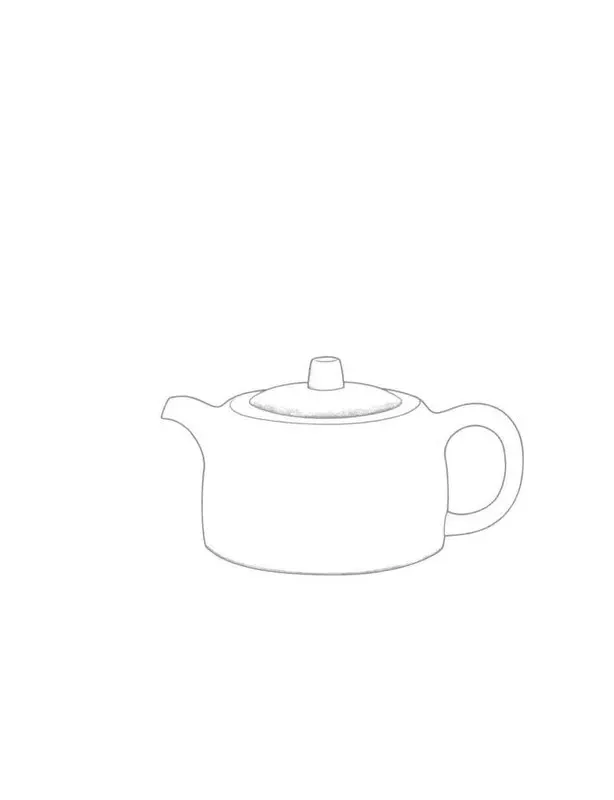
矮井栏壶
Ǎi Jǐnglán Hú
A concise visual guide to the 矮井栏壶 Yixing teapot form, with practical notes for tea use and clear limits on identification.
Object label
What the catalogue records.
Working English
I notice this text appears to be fragmentary notes about Yixing pottery pieces, likely catalog or authentication entries. The text seems incomplete or possibly corrupted, with scattered characters and inconsistent formatting. Here's my translation:
---
Yixing Pottery Authentication Records
Piece 1: Zhu Jinglan (Cast Well Railing)
Lid seal: Gu Jingzhou Base seal: Jingzhou hand-made Handle tip seal: Suo Period: Mid-to-late 1980s
Piece 2
Lid seal: Gu Jing Base seal: Jingzhou Handle tip seal: Guo Period: Mid-to-late 1980s
Piece 3
Base seal: Gu Jingzhou Seal: Jingzhou's work after age seventy Period: Mid-to-late 1980s
---
Note: The original text appears fragmentary with some characters that may be transcription errors (e.g., "顾景洲" vs. "顾景舟"). Gu Jingzhou (顾景舟, 1915-1996) was a renowned Yixing pottery master.
Show extracted Chinese label
部下 泪
铸井栏过
盖 印: 底 印: 雏梢印 : 年 代,
顾景舟 景舟手制
索 由
80 年代中后期
盖 印:顾景 底 印:景舟 把梢印 : 过
年 代:80年
舟
制过
屋
:代中后期
半
底
和
:
印 : 顾景洲 印 : 景舟七十后作 代 : 80 年代中后期
Book note
Read the working translation.
English working translation
The "Short Well-Curb Teapot"
The "Short Well-Curb Teapot" was created by Gu Jingzhou in his later years. He critically absorbed the stylistic characteristics of Chen Mansheng's "Longevity Inscription Well-Curb Teapot," with the body taking the form of a cylinder that is narrow at the top and wide at the bottom, full and rounded, elegantly spherical, with flowing lines. The lid rises slightly, forming a smooth curved line where it meets the body—a technique executed with masterful skill that adds layers to the teapot's form. The spout connects seamlessly with the body, with smooth and unobstructed flow of energy; the tip of the spout is slightly pointed and drooping, creating a lively and spirited effect. In 1989, two of Gu Jingzhou's "Short Well-Curb Teapots" were created in collaboration with renowned artists of the Jinling School of Painting, Wei Zixuan and Ya Ming respectively. The one created with Wei Zixuan bears the inscription "Divine Charm Naturally Formed" on the front, with "Pine and Rock Longevity" painted on the reverse. Under his brush, ancient pines and towering peaks emerge with vigor and elegance, displaying both robust vitality and vigorous charm. The one created with Ya Ming has "Green Pine Has No Splendor" inscribed on the front, with an inscription engraved on the bottom: "The teapot existed since pre-Qin times. Yixing purple clay began in the Ming Zhengde period, nearly five hundred years to the present, with no more than a dozen masters. Brother Gu Jingzhou should be considered a modern master; Gu's teapots embody the philosophical spirit of Chinese civilization, literary atmosphere, and the divine charm of painting."
---
[1] Xiao Jianmin, ed., Research on Chen Mansheng (Hangzhou: Xiling Seal Engravers' Society Press, November 2011), p. 129.
Compare the extracted Chinese
“矮井栏壶”为顾景舟晚年制作 。 他批判性地吸收曼生“延年铭井栏 考” 的造型特色,壶体呈上罕下宽的圆柱状, 丰用圆润,浑圆雅致, 线条流 畅 。搓盖征微隆起 ,与索身衔接部分形成一条圆润的四线 ,手法老练娴熟 , 增加了壶体的层次,一索流与壶体暗接, 气韵通畅,口端略作尖垂状,气韵 灵动 。1989 年 ,顾景舟的两把“然井栏者”,分别与金陵画派著名艺术家魏 紫中和亚明合作 。与魏紫辕合作的一把正面题书“神韵天成”, 背面绘“松 罕岁”, 笔下老松 、峰寓苍秀齐出 ,既见刚健之气 ,又显前劲之韵 。 与亚明 合作的一把正面书刻“青松本无华", 底部刻铬“壶 , 先秦有之 。 紫砂始于 明正德 ,圣今近五百年 ,高手不过十余人 。顾兄景舟当为近代大师 ,顾壶可 见华夏之哲学精神 、文学气息 、绘画神韵“
1 萧建民主编 :《陈曼生人研究 办 杭州 : 西诊印社出版社,2011 年11 月版, 第129页。
化 神
四
五