Source record 40 of 77
高井栏壶
Gāo Jǐng Lán Hú
A concise visual guide to the 高井栏壶 Yixing teapot form, with practical notes for tea use and clear limits on identification.
Object label
What the catalogue records.
Working English
I appreciate you sharing this text, but I'm having difficulty providing an accurate translation. The text appears to be fragmented or possibly contains specialized terminology related to Yixing pottery markings and seals that would require more context to translate properly.
What I can identify are some elements: - References to seals/stamps (印) - A name: 顾景洲 (Gu Jingzhou, a famous Yixing pottery master) - Location: 中国宜兴 (Yixing, China) - Time periods: 70年代 (1970s), 80年代 (1980s) - Phrases that might relate to pottery markings
However, the text structure seems incomplete or may be describing physical markings on a pottery piece rather than forming coherent sentences. To provide an accurate, scholarly translation that preserves all nuances, I'd need:
1. Clarification on whether this describes inscriptions on a specific teapot 2. More complete context around the fragmentary phrases 3. Confirmation of the correct character sequence (some characters seem unclear)
Could you provide additional context about this text, or verify if there might be formatting issues in how it was copied?
Show extracted Chinese label
下喜事泪
高井栏过
印 : 顾景洲
底 印:中国宜兴
年 代:70年代
日 目 代: 80 年代
天
1 :
: 顾景洲 景舟制外
Book note
Read the working translation.
English working translation
Transformation into Spirit
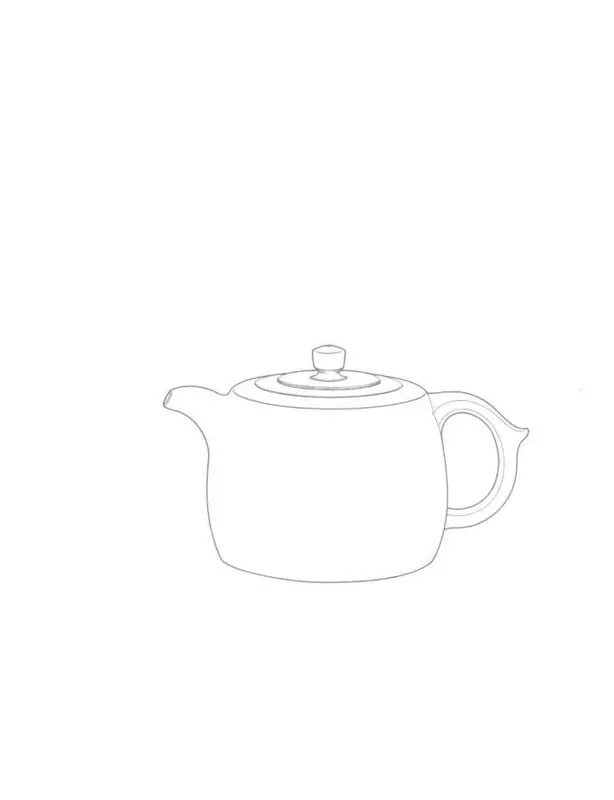
The "Tall Well Curb Teapot" was created in the 1970s and 1980s. With its columnar body, slightly tapered at top and bottom, the overall form is dignified and upright, its lines rounded and powerful, simple and bright. The flat shoulder and body lid fit together smoothly, with a decorative layer of overlapping discs added to the lid—viewed from above, they resemble rippling water rings in a well. The tall columnar knob is slightly wider at the top for easy handling, its form like a water droplet, harmonizing with the water ripple pattern on the pot's surface. The design is lively and rich with enduring meaning.
In 1980, Gu Jingzhou presented Tang Yun with a "Tall Well Curb Teapot," its form grand and composed. Inscribed on the back of the pot body: "On September 17, 1980, I visited my old friend Jingzhou in Yixing and present this as a memento, Lao Yao"—the calligraphy ancient and vigorous. On the front is painted a bamboo composition, with bamboo leaves swaying gracefully in the wind, elegant and spirited, extremely rare.
> Tang Yun's calligraphy and painting / Gu Jingzhou's craftsmanship on the Tall Well Curb Teapot
Compare the extracted Chinese
化
神 “高并栏壶”创作于 20 世纪七八十年代, 柱状壶身,上下微收,整体 造型端庄挺拔,线条圆融有力, 简洁明快 ; 平肩, 身盖平缓合体 ,盖上加饰 一层虚片,俯视如井中环环水波 ; 高柱钮上端微宽 ,便于拿取, 造型上若一 滴水珠,与壶面的水波纹协调 , 造型生动而寅意售永 。 1980 年 ,顾景舟赠送唐云“高井栏索”, 造型大气沉稳 。壶身背面刻有 “一九八D年九月十七日过宜兴访景舟老友赠此以为纪念,老药”, 字体古朴 苍劲 ; 正面绘竹图,,竹叶临风逸动, 况冰有姿,极为难得 。
唐云书画 / 顾景舟制作高井栏壶